
Synaptic Transmission
The process of information transfer at a synapse
Plays role in all the operations of the nervous system
1897: Charles Sherrington- “synapse”
Chemical and electrical synapses
•1921- Otto Loewi
•1959- Gurshan and Potter
Six Types of synapses
Axodendritic: Axon to dendrite
Axosomatic: Axon to cell body
Axoaxonic: Axon to axon
Dendrodendritic: Dendrite to dendrite
Gray’s Type I: Asymmetrical, excitatory
Gray’s Type II: Symmetrical, inhibitory
Non-synaptic chemical transmission
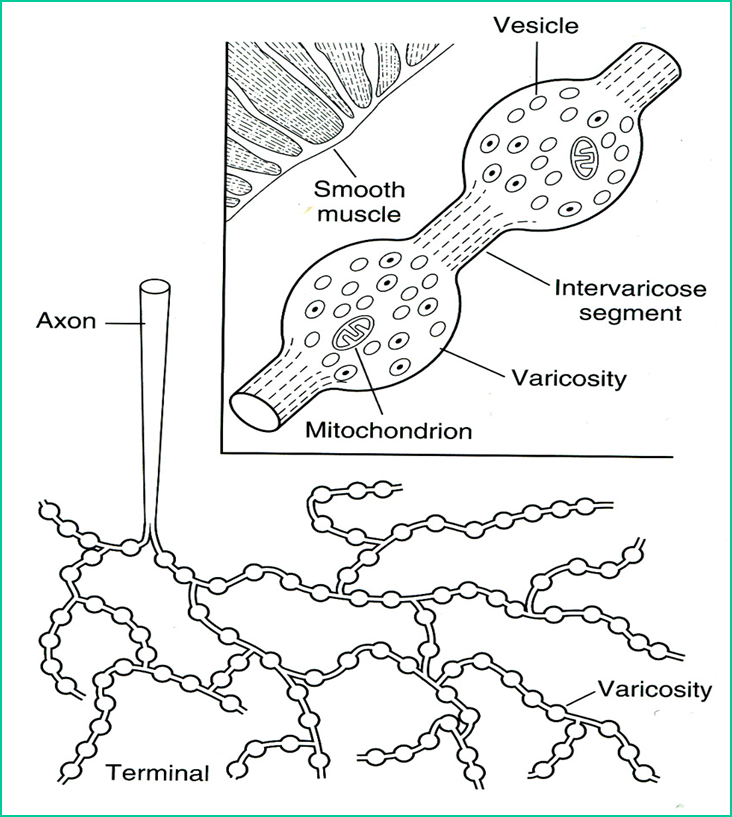
Fig.: Ending of postganglionic autonomic neurons on smooth muscle
The postganglionic neurons innervate the smooth muscles.
· No recognizable endplates or other postsynaptic specializations; · The multiple branches are beaded with enlargements (varicosities) that are not covered by Schwann cells and contain synaptic vesicles.
In noradrenergic neurons, the varicosities are about 5mm, with up to 20,000 varicosities per neuron;
· Transmitter is apparently released at each varicosity, at many locations along each axon;
· One neuron innervates many effector cells.
Electrical Synapse
•Impulses can be regenerated without interruption in adjacent cells.
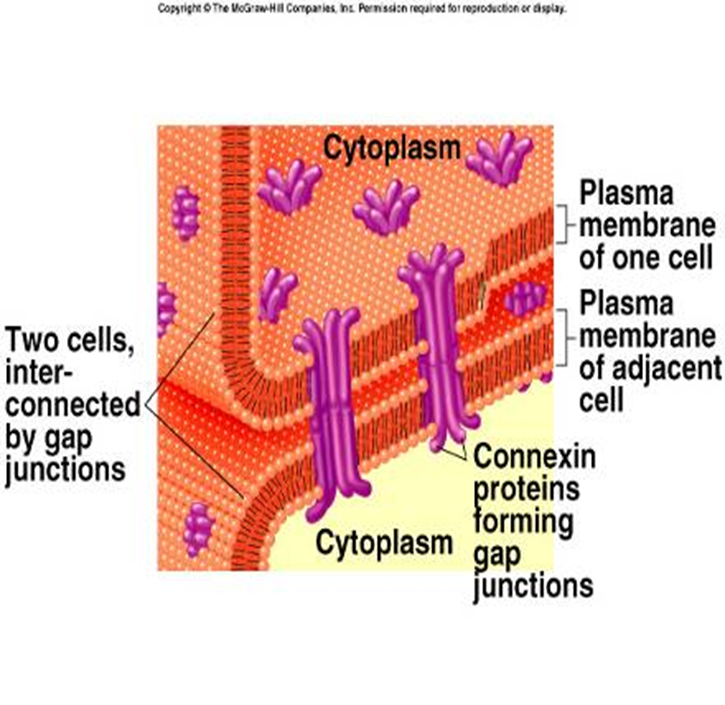
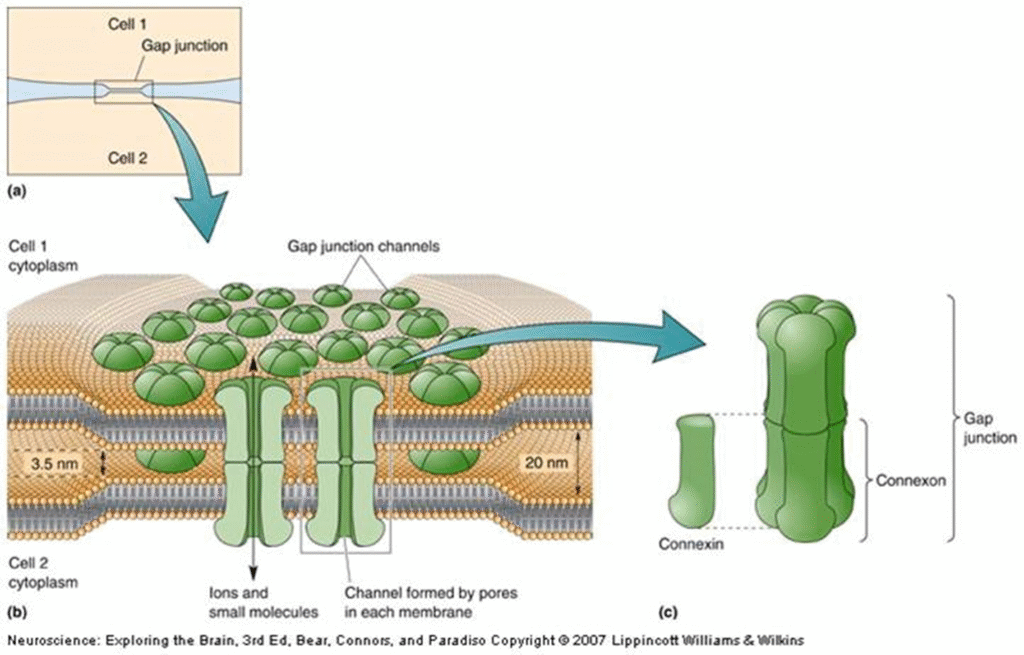
•Gap junctions:
Adjacent cells electrically coupled through a channel.
Each gap junction is composed of 12 connexin proteins.
•Examples:
Smooth and cardiac muscles, brain, and glial cells.
Electrical Synapses
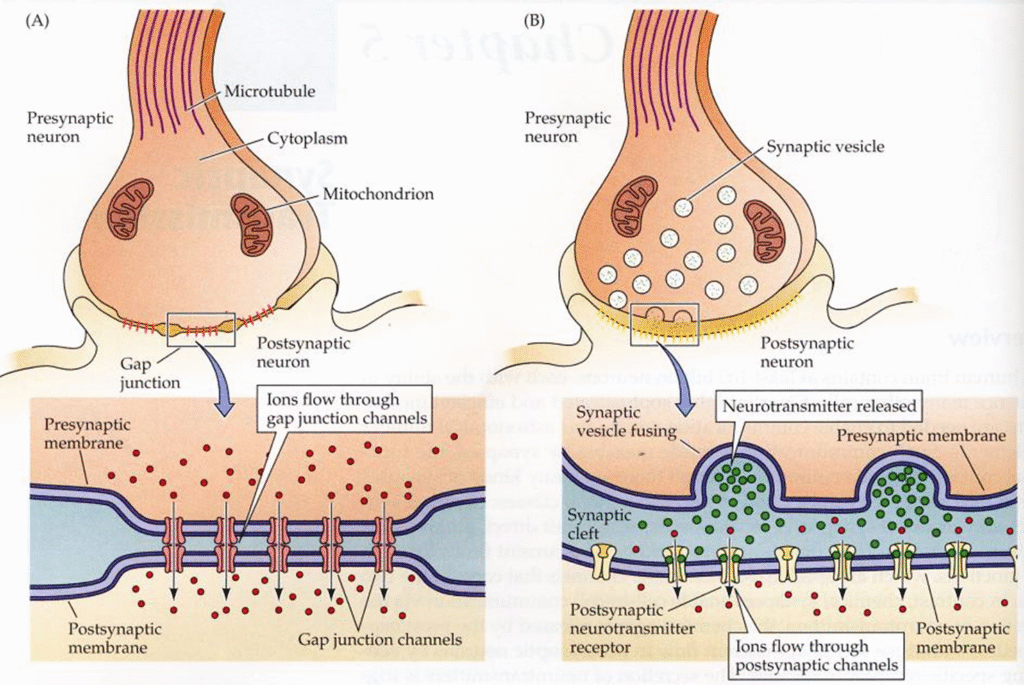
•Electric current flow- communication takes place by flow of electric current directly from one neuron to the other.
•No synaptic cleft or vesicles cell membranes in direct contact.
•Communication not polarized- electric current can flow between cells in either direction.
Chemical synapse
•The Chemical synapse is a specialized junction that transfers nerve impulse information from a pre synaptic membrane to a postsynaptic membrane using neurotransmitters and enzymes.
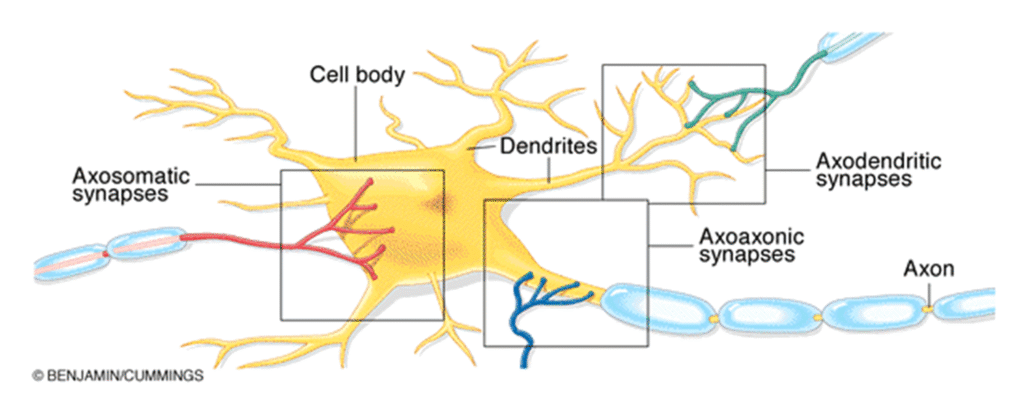
•Neurotransmitter- communication via a chemical intermediary called a neurotransmitter, released from one neuron and influences another.
•Synaptic cleft- a small gap between the sending (presynaptic) and the receiving (postsynaptic) site.
•Synaptic vesicles- small spherical or oval organelles contain chemical transmitter used in transmission.
•Polarization- communication occurs in only one direction, from sending presynaptic site, to receiving postsynaptic site.
Chemical Synapse
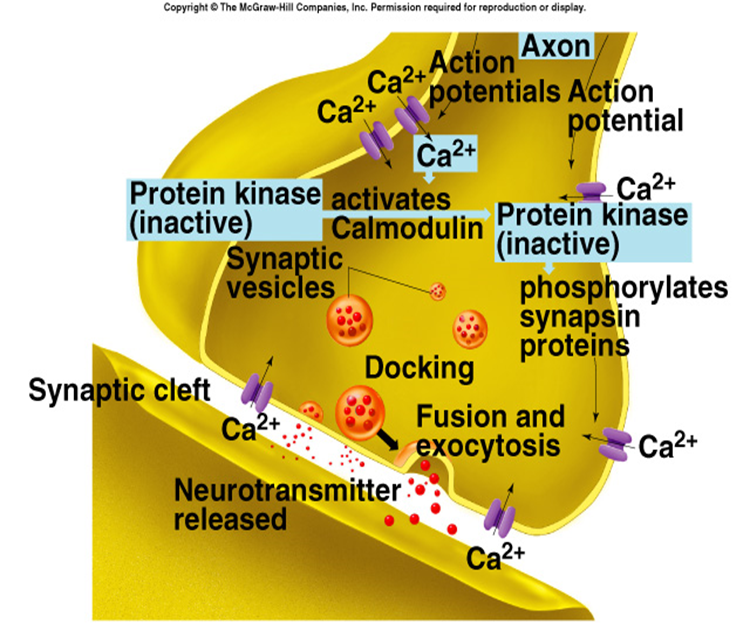
1. Synaptic Transmission Model
•Precursor transport
•NT synthesis
•Storage
•Release
•Activation
•Termination ~diffusion, degradation, uptake, auto receptors.
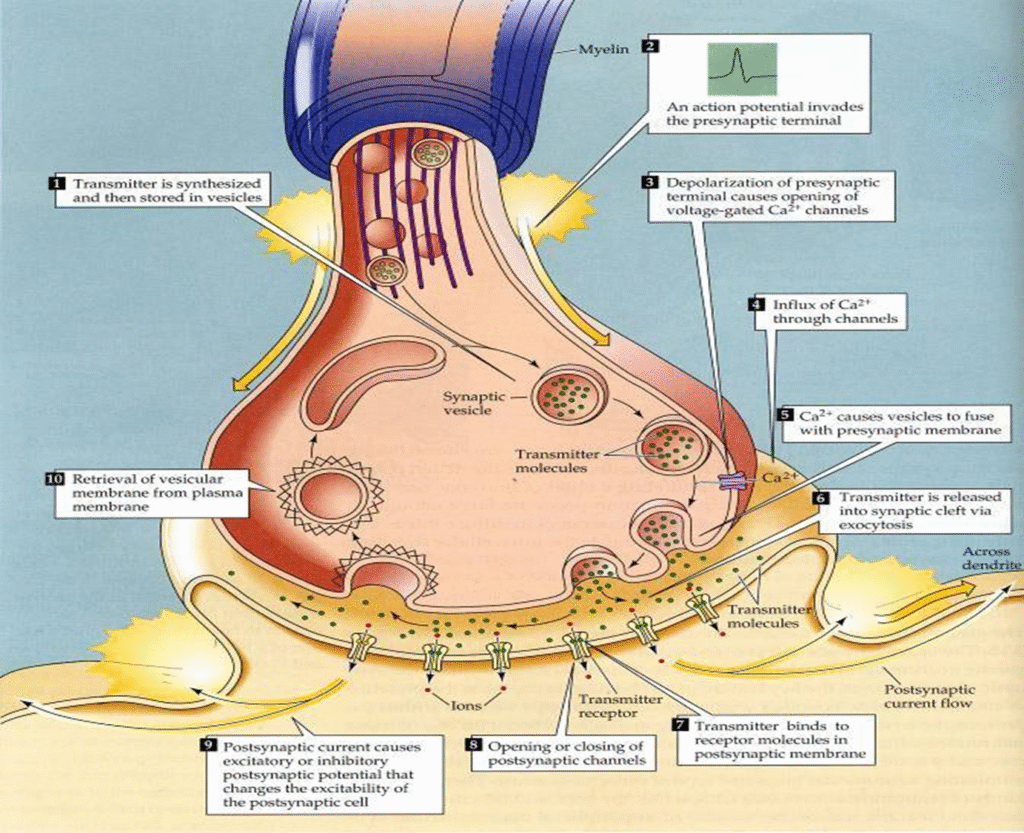
•NTs are released and diffuse across synaptic cleft.
•NT (ligand) binds to specific receptor proteins in postsynaptic cell membrane.
•Chemically-regulated gated ion channels open.
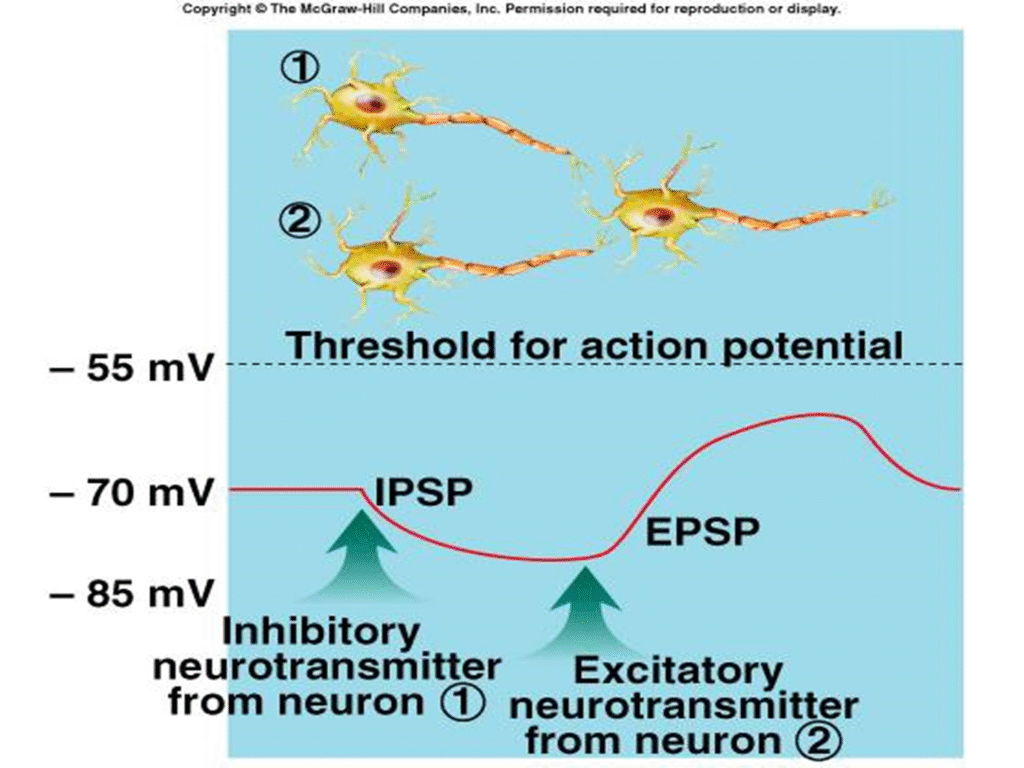
–EPSP: depolarization.
–IPSP: hyperpolarization.
•Neurotransmitter inactivated to end transmission.
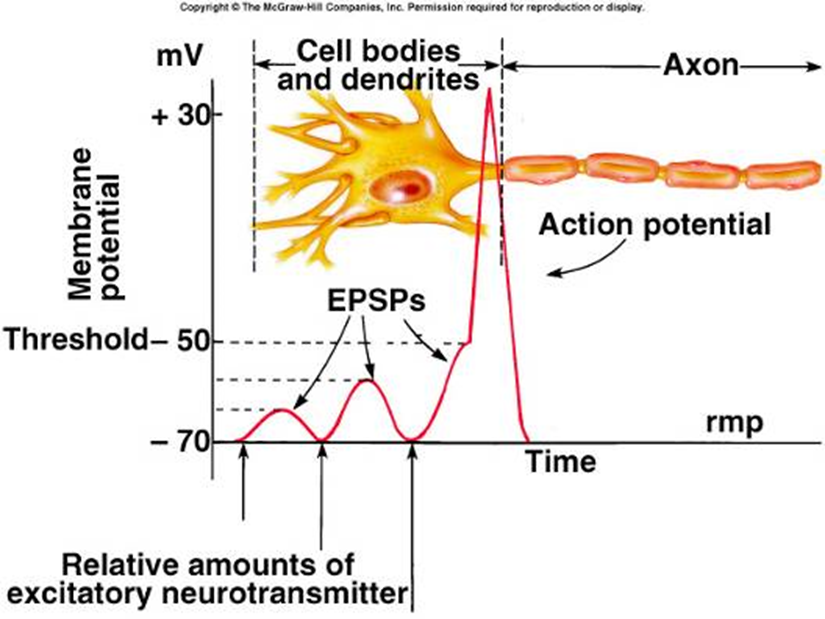
1)Excitatory postsynaptic potential (EPSP)
·An AP arriving in the presynaptic terminal cause the release of neurotransmitter.
·The molecules bind and active receptor on the postsynaptic membrane.
·Opening transmitter-gated ions channels (Na+) in postsynaptic- membrane.
·Both an electrical and a concentration gradient driving Na+ into the cell.
·The postsynaptic membrane will become depolarized (EPSP).
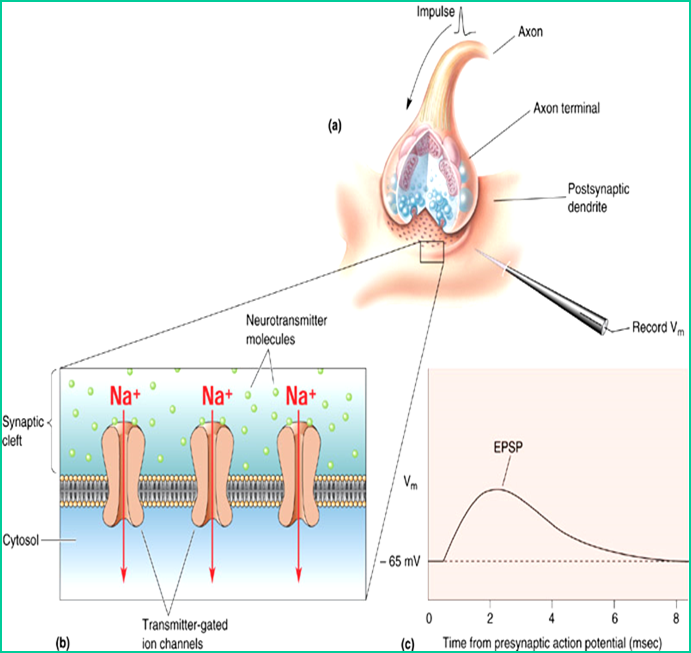
•No threshold.
•Decreases resting membrane potential.
–Closer to threshold.
•Graded in magnitude.
•Have no refractory period.
•Can summate.
EPSP
2) Inhibitory postsynaptic potential (IPSP)
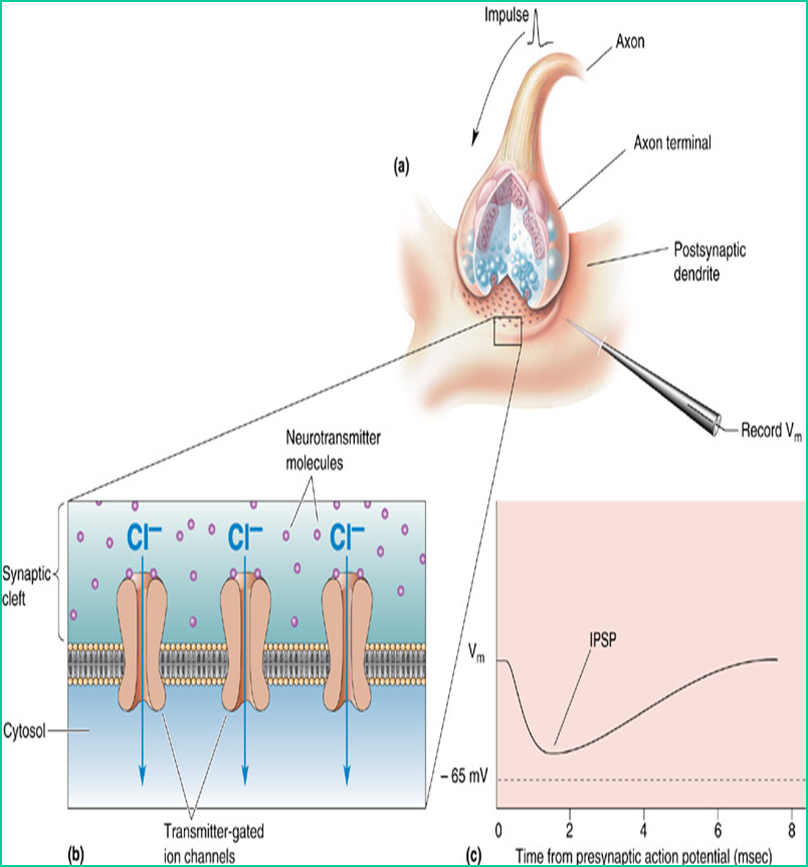
• A impulse arriving in the presynaptic terminal causes the release of neurotransmitter;
•The molecular bind and active receptors on the postsynaptic membrane open CI– or, sometimes K+ channels;
• More CI– enters, K+ outer the cell, producing a hyperpolarization in the postsynaptic membrane.
No threshold.
Hyperpolarize postsynaptic membrane.
Increase membrane potential.
Can summate. No refractory period.
3- Synaptic Inhibition
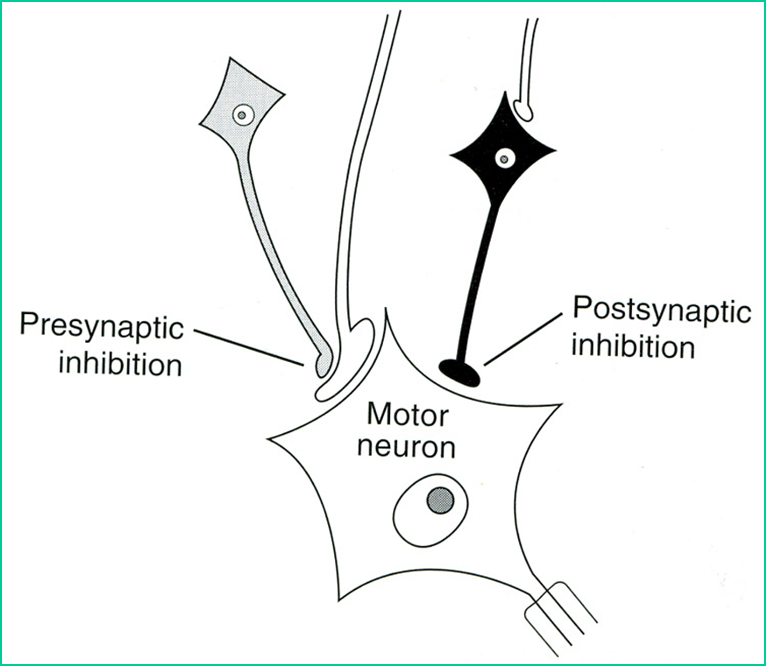
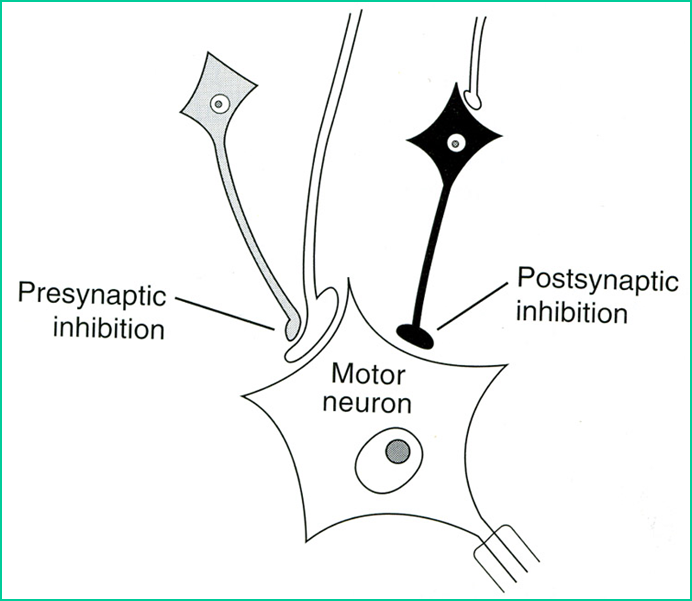
•Presynaptic inhibition:
–Amount of excitatory NT released is decreased by effects of second neuron, whose axon makes synapses with first neuron’s axon.
. Postsynaptic inhibition
·Concept: effect of inhibitory synapses on the postsynaptic membrane.
·Mechanism: IPSP, inhibitory interneuron
·Types:
¨Afferent collateral inhibition( reciprocal inhibition)
Recurrent inhibition.
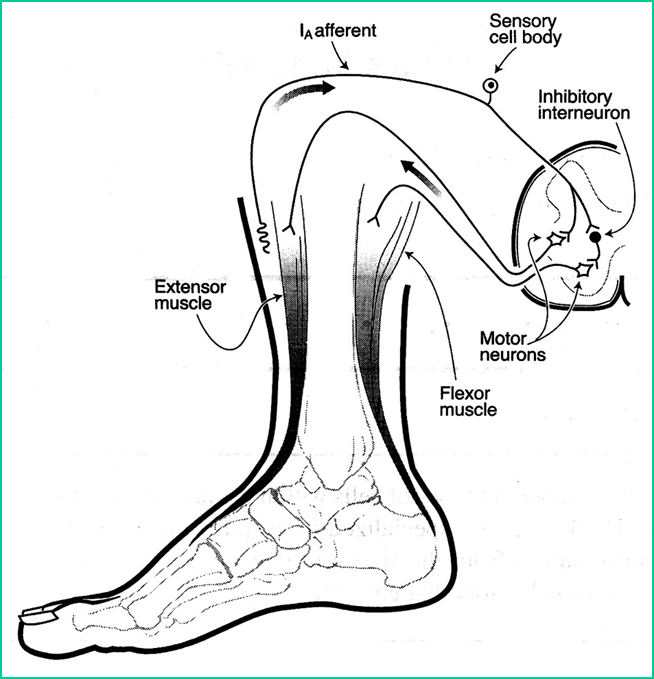
1- Reciprocal inhibition
Activity in the afferent fibers from the muscle spindles (stretch receptors) excites (EPSPs) directly the motor neurons supplying the muscle from which the impulses come.
At the same time, inhibits (ISPSs) those motor neurons supplying its antagonistic muscles.
The latter response is mediated by branches of the afferent fibers that end on the interneurons.
The interneurons, in turn, secrete the inhibitory transmitter (IPSP) at synapses on the proximal dendrites or cell bodies of the motor neurons that supply the antagonist.
Postsynaptic inhibition
2) Recurrent inhibition
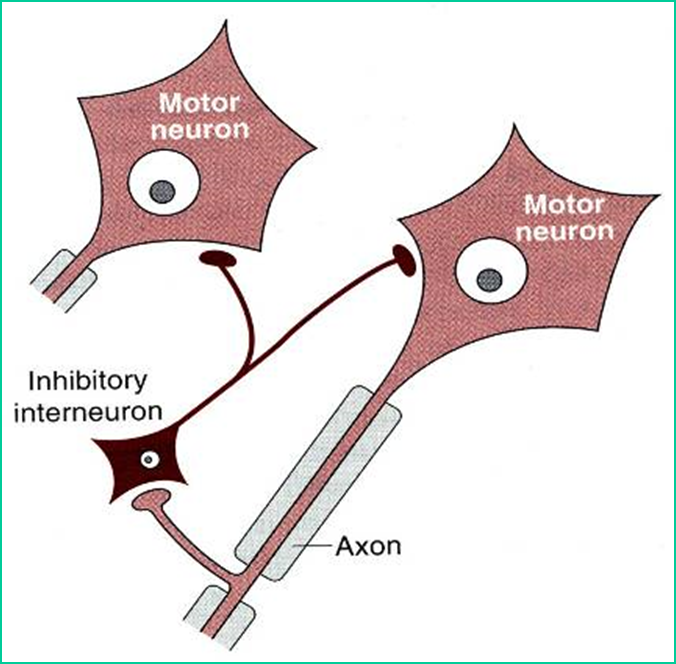
Neurons may also inhibit themselves in a negative feedback fashion.
Each spinal motor neuron regularly gives off a recurrent collateral that synapses with an inhibitory interneuron which terminates on the cell body of the spinal neuron and other spinal motor neurons.
The inhibitory interneuron to secrete inhibitory mediator, slows and stops the discharge of the motor neuron.
2) Presynaptic inhibition
Concept: the inhibition occurs at the presynaptic terminals before the signal ever reaches the synapse.
The basic structure: an axon-axon synapse (presynaptic synapse), A and B.
Neuron A has no direct effect on neuron C, but it exert a Presynaptic effect on ability of B to Influence C.
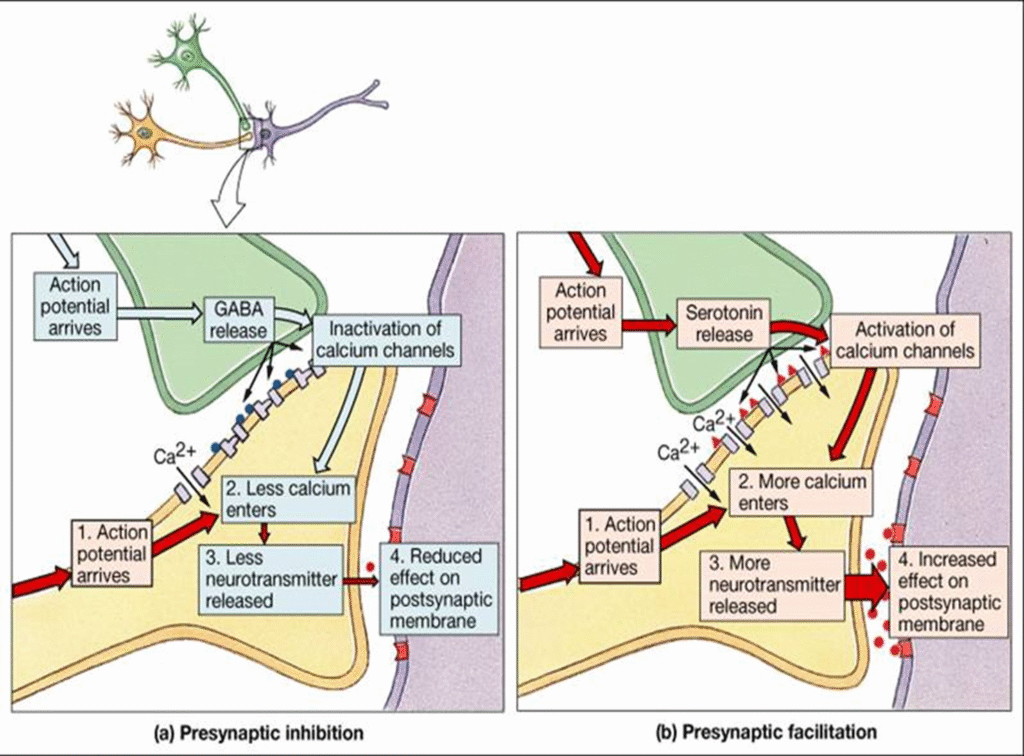
The presynaptic effect May decrease the amount of neuro- transmitter released from B (Presynaptic inhibition) or increase it (presynaptic facilitation).
The mechanisms:
• Activation of the presynaptic receptors increases CI– conductance to decrease the size of the AP reaching the excitatory ending.
Reduces Ca2+ entry and consequently the amount of excitatory transmitter decreased.
• Voltage-gated K+ channels are also opened, and the resulting K+ efflux also decreases the Ca2+ influx.
Reference
Animal physiology by Eckert, 4th edition.