Basic Types of Taxonomic Characters
- Morphological Characters – structural attributes of organisms at the cellular level or above.
- Karyological Characters – the structure of chromosomes
- Biochemical Characters – the structure of or the physical attributes of molecules, including DNA and the products of DNA.
- Physiological Characters – nonstructural metabolic or related activities which may be quantified.
- Behavioral Characters – nonstructural, actions taken by organisms that may be described and/or quantified.
- Ecological Characters – nonstructural, products of the interaction of the organism with its environment (including other organisms).
- Biogeographic Characters – geographic range data.
Comparison of material depends to some extent on the purposes of the comparison. For mere identification, a suitable key, with attention given only to the characters in it, may be enough in well-known groups. If the form is likely to be a new one, its general position is determined by observing as many characters as possible and by comparing them with the definitions and descriptions in a natural classification. The new specimen is compared with its nearest known relatives, usually with reference to type material. Any character may be of taxonomic use. In general, taxonomists tend to work from preserved material, so that their findings can be checked. For extinct forms, of course, only preserved material (fossils) is available.
Many biochemical, physiological, or behavioral characters may be at least as good as anatomical characters for discriminating between closely related species or for suggesting relationships. There has been a tendency to discount anatomical characters, but, when they are obtainable in quantity (as for most plants and animals), they probably represent as large a sample of the effects of the organism’s heredity as can be got, short of complete genetic analysis. Enthusiasts in genetics often stress that the only real basis for classification is the actual genotype of each organism—i.e., the hereditary information by which the organism is formed. It is impossible to obtain such information for extinct forms, and the time required to obtain it for most existing ones would be enormous, even if the techniques were available. An important development, however, has been the hybridization technique employing deoxyribonucleic acid (DNA), the substance by which hereditary information is coded. With this technique, it has been possible to determine similarities in parts of DNA molecules from different organisms but not the nature of their differences.
In making comparisons, resemblances resulting from convergence must be considered. Whales and bony fishes, for example, have similar body shapes for the same function—progression through water. Their internal features, however, are widely different. In this case, the convergence is evident because of the large number of characters that link whales to other mammals and not to the fishes and because the fossil record for the vertebrates provides a fair indication of the actual evolutionary sequence from primitive fishes through primitive amphibians to primitive reptiles, mammal-like reptiles, and mammals. In the absence of a good fossil record, it may be difficult or impossible to positively identify a case of convergence, yet it has been asserted that the occurrence of convergence must not be stated unless it has been “proved.” To obey this assertion would be to make the method of analysis dictate in part the results achieved.
In some forms, especially internal parasites, great modification has occurred in adapting to a parasitic way of life. The “root system” of the “tumor” (in reality a parasite) found under the abdomen (“tail”) of some crabs, for example, penetrates through the crab’s body. The parasite is unrecognizable as a close relative of the barnacles (crustaceans not far removed from the crabs themselves) without the free-swimming larval stage, which shows its affinities. Transient or inconspicuous characters may be of great importance in indicating affinities; the complete life cycle of a specimen may have to be observed before its affinities can be determined. Although such characters may be useless for identification and for definition of a natural group if only a few forms in a group show them, they may be of the utmost importance in understanding relationships. Characters are therefore weighted to some extent by the taxonomist according to their utility for different purposes. Any characters intrinsic to the organism can be used in classification. Extrinsic characters, including the position of fossils in a geological sequence and geographical distribution of fossil and recent forms, may force the taxonomist to look more closely at the intrinsic characters.
Weighting or no weighting (i.e., by the degree of importance) of characters has been a subject of great dispute. On the one hand, it has been pointed out that weighting is often demonstrably arbitrary and always imprecise. On the other, it has been said that if characters were actually examined without weighting, some obvious cases of extreme convergence would have to be classed with each other instead of in their proper place. A classification based on unweighted characters is called a phenetic one (based on appearances) as opposed to a phyletic one, in which characters are weighted by their presumed importance in indicating lines of descent. The quarrel results in part from a misunderstanding of aims.
At present, the classification of living things is a rough, non-quantitative sketch of their diversity. A properly surveyed map of this diversity would advance classification enormously. If, on such a map, the diving petrels (Pelecanoidids) of the Southern Hemisphere and the little auk (Plautus) of the Northern Hemisphere were closer to each other than to their own phylogenetic relatives (the other petrels, fulmars, and albatrosses; and the guillemots, terns, gulls, and shorebirds, respectively), this would show the extent of their convergence, which is certainly great, but it would not be a reason for combining them in a separate group. In recent years numerical techniques have been developed for estimating overall resemblance or phenetic distance. For these methods, it is necessary to use large numbers of characters taken from each form and, as far as possible, at random; this involves enormous labor. The mathematical techniques are not as yet wholly satisfactory, some having been borrowed from statistical analysis and applied to taxonomic problems without any consideration of whether they were designed to answer the questions asked by the taxonomist.
It is worth noting that if there were a complete fossil record for any group, then simply placing any form nearest to those most like it (which must be its immediate ancestors or descendants) would produce an arrangement in which all cases of parallelism and convergence would be revealed. Since evolution occurs by descent with modification, this arrangement would presumably reflect the greatest use of the information available about the group and thus would also be the most useful general arrangement. For such groups, the phenetic arrangement is the phyletic one also.
Taxonomic and Systematic Characters
A feature (attribute, observable part) of an organism. In practice, a character is a part or attribute of an organism that may be described, figured, measured, weighed, counted, scored, or otherwise communicated by one to another.
Multiple characters that are homologous in a series or other form are termed to be part of a Transformation or Character series.
For most systematic work, of course, for characters to be useful they must be divisible into two or more states or expressions.
e.g. no. segments on tarsus of beetle (1,2,3,4)
e.g. red spot on wing of bird, present or absent.
Taxonomic Characters have several functions:
1) They have a diagnostic aspect uniquely specifying a given taxon (used during an analytical phase to determine the units of classification).
2) Function as indicators of relationship (Synthetic phase of delimiting and ranking of higher taxa).
3) Key Characters – easily perceived, low variability, present in preserved materials.
Ontogenetic Display of Characters
Individual organisms display a variety of possible characters in its life span. Juveniles to adult.
Holomorphology – The totality of an individuals’ characteristics from fertilization to death or its “total form”
Semaphorant – an organism at a particular stage in its life history. e.g. juvenile, lava, adult, medusa, polyp, etc.
Species have holomorph- ologies – This is the sum of holomorph ologies of all individuals belonging to the species. In practice we estimate a species holomorph- ology by examining specimens representing various life stages, sexes, etc.
Most basic step in systematics involves comparing individual organisms to see if their characters are similar or different. Obviously, this comparison should involve comparable semaphorists.
Quantitative versus Qualitative Characters
Taxonomic and systematic sharacters may be either quantitative or qualitative.
1. Quantitative – those things counted, instrument values, distances, measurements, etc.
2. Qualitative – those things basically amenable to description, size, shape, color, etc.
Morphological Characters
– Structural attributes of organisms at the cellular level or above.
Characters of most groups, the traditional characters employed in systematics.
Usually comprise a series of morphological complexes.
Array of auto genetically linked morphological characters. In some cases, this complex is composed of a number of more-or-less interrelated characters.
Utility of a particular morphological character varies from group to group and different levels of universality.
To be useful they must be:
1. not subject to wide variation among specimens
2. not readily modified by the environment (ecophenotypic)
3. consistently expressed
4. available in specimens you are using
5. effectively recorded.
Characters that do not vary or vary randomly between groups are of no use to unraveling phylogenetic relationships at that particular level of analysis. However, a character that is invariant may well have a homologue at another level of universality. It is advisable that someone interested in a particular group should examine previous work done by other investigators to evaluate the usefulness of characters used by previous researchers and 2) look for previously underutilized character.
External Morphology
Most characters, useful in keys, etc. may be single or complex
- shape
- size
- color
- color pattern
- counts of various repeated or comparable structures. Flower parts, setae or bristle, scales, fin rays, etc.
Internal Morphology
Various techniques used to provide examination of body parts (clean & stain, skeletal preps, sectioning, etc.). Frequent external characters have little information useful to evaluate systematic relationship and you must test internal traits.
Sexual Dimorphism
Frequently species differ sexually in characters so that the mature epi phenotypes appear different. May occur only during breeding season.
Embryonic Character
Characters have an ontogeny, and this may be continuous or discontinuous where there are discrete body forms which undergo metamorphosis. Because of these changes we must use equivalent semaphorists. Some ontogenetic characters are useful in establishing relationships. Particular ontogenetic pathways may be useful for relationships. However, there can be problems with these types of characters if one assumes terminal addition.
Chromosomes Characters
Chromosomal changes may accompany or provide speciation reduced fecundity, invisible hybrids, sterile.
Three levels are analyzed commonly for chromosomes:
Alpha Karyology – Number and size of chromosomes
Beta Karyology – Number and location of centromere (where spindle fibers attach) to allow for comparison of chromosomes between species.
Gamma Karyology – Number, centromere & stains for various regions of chromosomes to identify homologous parts of chromosome
Chromosome number expressed as haploid or diploid
Morphology – pair homologous pairs in illustrations (photos)
compare number of metacentric, telocentric, acrocentric
Banding – particular stains identify particular regions of DNA. These bands allow you to determine homologous areas of a chromosome.
Variation in Taxonomic and Systematic Characters
There are three major types of character variation within and between species that is typically observed in systematic and taxonomic studies. These include:
| A | Geographic | Variation in one or more characteristics over space. |
| B | Sexual | Variation in one or more traits between or within a sex. |
| C | Individual | Variation in one or more characteristics within the lifetime of an individual organism. |
There may also be variation observed within the lifetime of an individual or within or between demes, populations, and species that is not under genetic control and thus would not be considered heritable variation. However, this type of variation can cause many problems in some studies where the life cycles or histories of organisms are unknown or where environmental “factors influence” character variation.
Regardless of the “type” of variation that may be encountered there is no substitute for having experience with the group of organisms that you wish to study. Through this experience you gain valuable knowledge as to what type of variation observed in an individual organism is important (relative to the question at hand) and what variation is not important.
1. Geographic Variation
As implied by the name this type of variation occurs over geographic space. This includes, but is not limited to, latitudinal, longitudinal, and altitudinal variation of characters.
Usually, researchers examine variation in demes, populations, and species and look for any “geographic” correlation with any of this variation. Within logical boundaries, if a “geographic” component to the variation can be identified then one may hypothesize that the observed variation within the taxon may be clinal and may be correlated with an environmental component. If so, such a character may have a selective advantage in some geographic areas or, developmentally, characters may exist in some geographic areas because of temperature, light, or other physical influences early in ontogeny.
Alternatively, in some instances, what may appear to be clinal variation in a taxon may be the remnants of an ancestral cline or may be clinal variation in characteristics that are not involved in species identification.
Below, are a few examples of geographic variation within some species. Other examples are provided in the previous lecture regarding different types of characters. Finally, there is no substitute to reading the literature of the groups of organisms that you wish to study (as well as other groups) to gain insight into character observation and interpretation and analysis and interpretation of variation observed.
2. Sexual Variation
As implied by the name of this type of variation males and females frequently vary from one another for characteristics. This is most often known as sexual dimorphism and the characteristics that do differ are often referred to as primary or secondary sexual features. These latter terms will be discussed below.
Sexually dimorphic characters may not vary in larval and juvenile individuals; variation may be obtained only later in life. Adults may display these characters throughout the year or may only possess them during the breeding season. In the former case, usually the dimorphic characters are most extreme during the breeding season. Some species do not vary in secondary sexual features and sex is determined only by examination of gonadal tissue.
Aside from the obvious differences that will be observed in the gonads between sexes there seems to be an unlimited variety of different types of characters that differ between sexes. In vertebrates most sexual dimorphism is displayed by the males being more brightly colored relative to females; however, this is reversed in Phalaropes.
3. Individual Variation
Morphological Variation
I. Age variations
Common in many groups of organisms to have different looking juveniles or larvae from adults. Many synonyms have resulted from this phenomenon.
For example, Linnaeus described the immature striped goshawk as a different species from adult. This was obviously the result of molting pattern differences.
In some groups of fishes some have immature forms that are so different that they have been placed in separate genera or families. The lamprey larval forms referred to as ammocetes were at one time placed in the genus Ammocetes; or fishes of the order Aulopiforms (tarpon, eels) have a leptocephalus larval form and these have been placed in the genus Leptocephalus. This can be a real problem in groups where larvae do not look anything like adults (e.g., larvae of coelenterates, echinoderms, mollusks, etc.). This problem is also common among fungi and lower plants.
Allometric Variation
This type of variation is typically thought of as being under genetic control. Allometric growth or variation results when the size of some particular structure or number of structures is disproportionate relative to other structures or the rest of the body. Thus, individuals of different sizes may have different sized traits. For body measurements this is solved with multivariate statistics or use of ratios. In fishes sometimes the number and sizes of breeding tubercules of adult males may be correlated with their body size.
With ontogenetic variation there can be variation in some traits through development. Other traits, like meristic, do not vary after they have formed. In some birds the size of the bill increases with age; horns of some mammals also increase with age.
Seasonal Variation in Individuals
In species that survive for more than one year or more than one reproductive season, characteristics may vary depending upon the season. For example, the plumage of birds, antlers of some mammals, and general breeding coloration.
In some invertebrate groups that produce multiple batches of young during a year may produce different types of offspring depending upon season. For example, in “cool” periods (spring) individuals may have different attributes relative to those produced during the summer. Butterflies in Spring are typically larger than those in the Fall.
Cycle -morphosis – season variation process that occurs in some invertebrates like rotifers and cladocerans. The variation in Daphnia can be quite extreme depending upon the temperature, turbulence of H2O, and other properties of H2O. In rotifers the type of food may alter morphology.
II. Social Variation
In some social insects (bees and wasps, termites) certain castes are developed (reproductive, workers, soldiers). The individuals may be males, females or both. The different structural types that are observed may be the result of different larval food or may be due to hormonal or other controls. Obviously, these different forms should not be considered different species.
III. Ecological Variation
Habitat Variation
Populations of a single species may occur in different habitats in the same region and are often visibly different depending upon the habitat that they are found in. Taxonomic treatment of local variants of this nature have fluctuated between two extremes. Some researchers have considered them to be different species while others have considered them to be non-genetic variants. Obviously, one can only determine the status of such entities with additional information derived from controlled growth studies or genetic analyses.
Some species are particularly plastic, such as mollusks (snails and mussels). In these species those in the upper parts of rivers where there is cooler water and more flow have different forms from those in lower reaches with higher temperatures and lower flow. In limestone areas their shells may be thicker and of a different shape from those in other areas. In some cases, it may be important to transplant populations or rear them in laboratories to solve the problem. As above, however, some of this variation may be due to ecophenotypic variation while other aspects of it may be heritable variation that can be detected using genetic studies.
Example: In France, Schnitter (1922) recognized 251 species of Anodonta; now considered to be 2 species.
Temporary Climatic Conditions
Some species have tremendous phenotypic plasticity and for some traits a different phenotype is produced in years of extreme conditions (drought, cold, warm weather) relative to those from other year classes under normal conditions. Fishes are commonly dwarfed in bad years. Stunted growth or periods of exceptionally rapid growth can be displayed in different proportional traits.
Host-Determined Variation
Parasitic species may display different traits dependent upon the host on which they feed. Cocoons can vary in color depending upon wasp host. Some wasps may be winged or wingless, depending upon host. Some hosts may display different traits when parasitized. Color patterns may vary with fishes sometimes if they are parasitized (usually this is obvious).
Density-Dependent Variation
Crowding can influence morphological variations. This can be a result of reduced food supply or not. Under crowded conditions the phenotypes may vary from those reared under less crowded conditions: This phenomenon is particularly common with locusts.
Neurogenic or Neurohumoral Variation
Color change in individuals due to regions in environment. Accomplished through the concentration or dispersal of color bearing bodies known as chromatophores. This has been observed in chameleons, some lower vertebrates, crustaceans, cephalopods, and flat fishes.
A common example of this phenomenon is that of colored fishes begin placed into a white bucket. After being in the bucked for a few minutes the coloration is “washed out” and the organism looks different to you than it did 5 minutes previously.
Another common example includes individuals captured over different colored substrates. In fishes those collected over a light sand will be lighter in coloration (and lose some of their darker colored markings) relative to conspecifics captured over a darker sand or gravel at the same location.
IV. Traumatic Variation
This type of variation occurs with varying frequency depending on the group. It is usually obvious, but in some cases may be subtle and misleading.
Parasite individual variation
Typical patterns discovered in a host individual will include swelling, distortion, and perhaps mechanical injury. With insects parasites can alter head size, wing venation, and other structural features. Parasitized fishes may appear pale and soft, have darks spots on the body, have weak fin rays, pop-eyed and pot-bellied appearance, have small mouths, nostrils that are joined, no lateral lines, an increase in scale numbers and other abnormalities.
Teratological or accidental
Alterations in development. Usually these are externally induced but can be developmental and may be from hormonal control. External stimuli for aberrant morphologies may be mechanical, physical, or chemical. Usually obvious because individuals appear as freaks!
Post-mortem Changes
Common in some museum specimens that have been fixed or preserved or pinned. Colors are often lost or fade, preserved bodies may appear odd in some cases. In some instances, some color patterns do not appear until after specimens are fixed. Some insects that are yellow turn red in cyanide.
Thus, in taxonomic and systematic studies there is no substitute for observing your taxa in life from various locations within its range. Also, be sure to take careful notes of life colors.
Genetic Variation
Before, the same individual is actually or potentially subject to change in appearance. In addition to this non-inherited variation, there is much interpopulation variation which is primarily due to differences in genetic constitution. This variation can be more or less arbitrarily divided into two such classes.
I. Sex-Associated Variation
Among the genetically determined variants within a population, there may be some that are sexually associated. They may be sex-linked (expressed in one sex only) or be otherwise associated with one or the other sex.
Primary sex differences – Those that involve primary sex organs used in reproduction (gonads, genitalia). Where the sexes are otherwise quite similar, these will rarely be a source of taxonomic confusion.
Secondary sex differences – Many groups display pronounced sexual dimorphism. These differences can be quite striking. Different sexes have frequently been described as different species until more work has been done on a group.
Alteration of Generations – In some groups there may be an agamic stage that looks quite different from a reproducing stage. In aphids the parthenogenetic females are wingless whereas the sexual females have wings.
Gynandromorphs and Intersexes- Gynandromorphs display male characters on one part of the body and female on the other. Due to unequal somatic distribution of sex chromosomes. Spiders
Intersexes – exhibit a blending of male and female traits. Thought to result from upset in balance of male tendency and female tendency genes. Can be from irregularities in fertilization on mitosis or physiological disturbance due to parasitism. Occur most frequently in areas of interspecific hybrids.
II. Non-Sex Associated Individual Variation
Continuous Variation – Most common type of variation due to slight genetic differences which exist between individuals. No two individuals are exactly alike in a population genetically or morphologically. This is one of the foremost tasks of the taxonomist. No single individual is “typical” of the characters of a population. Only with statistics of the whole population can we arrive at the true picture of the whole population.
Each character is likely to show different degrees of variation in a population. Likewise, there will be differing degrees of variation between species for a character.
Discontinuous Variation – Differences between individuals in a population are, in general, slight and intergrading. In some species, however, can be grouped into different classes determined by some characters. This discontinuous variation is frequently termed polymorphism. Frequency such polymorphisms may be controlled by a single gene.
Cichlasoma minckleyi – This is a cichlid species found only in some small bodies of water in northern Mexico. In these populations biologists have identified two different morphologies in tooth structure. After careful study, this appears to be an instance of a polymorphism in tooth structure.
Peppered moth – industrial melanism.
Many bird species have been proposed to demonstrate this type of polymorphic variation within populations for morphological characteristics.
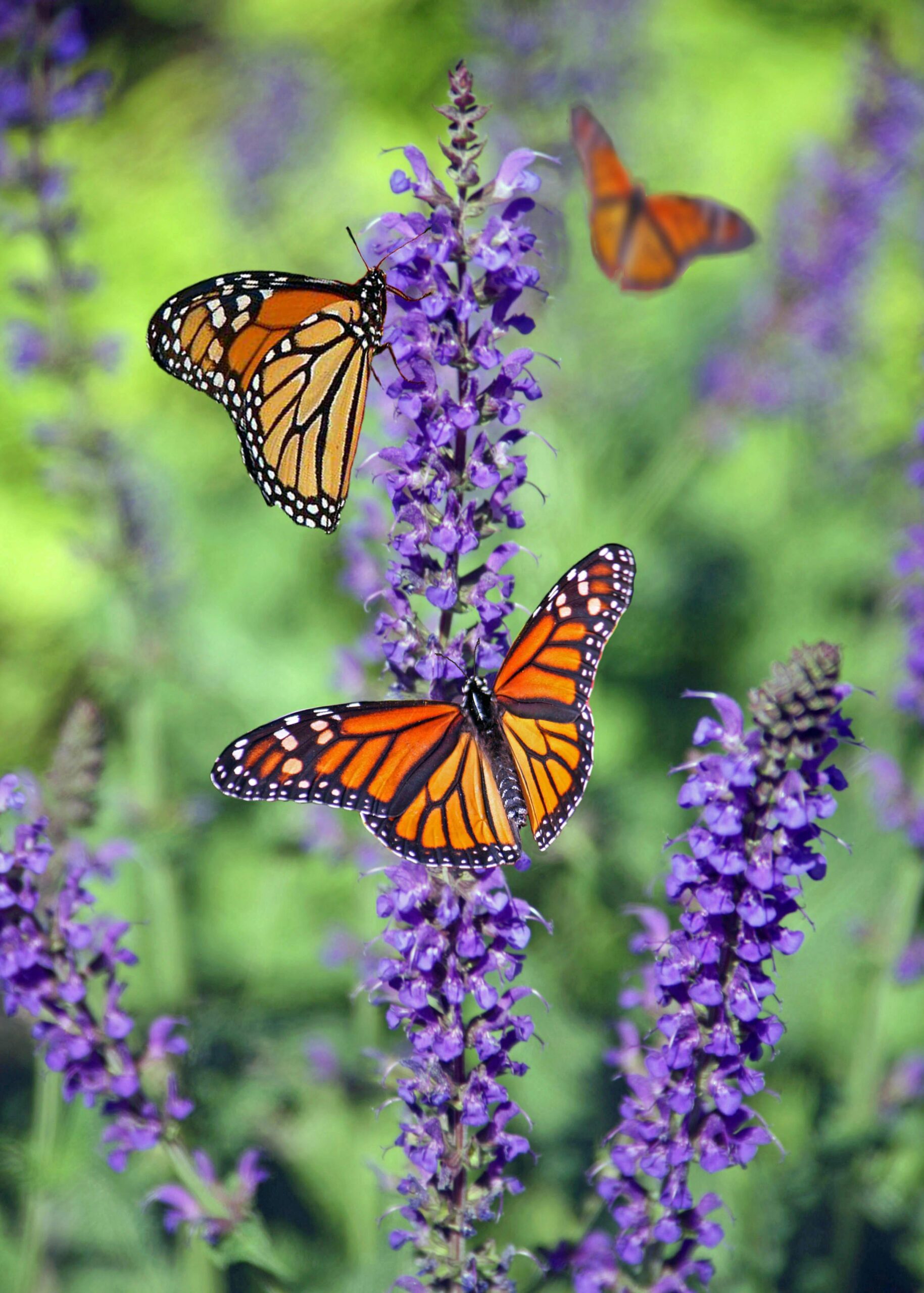
Some butterflies which mimic poisonous species may have more than one morphotype in a population. By possessing multiple mimics to poisonous butterfly species, the polymorphic species has an advantage when it comes to predation. This is special form of Batesian mimicry.