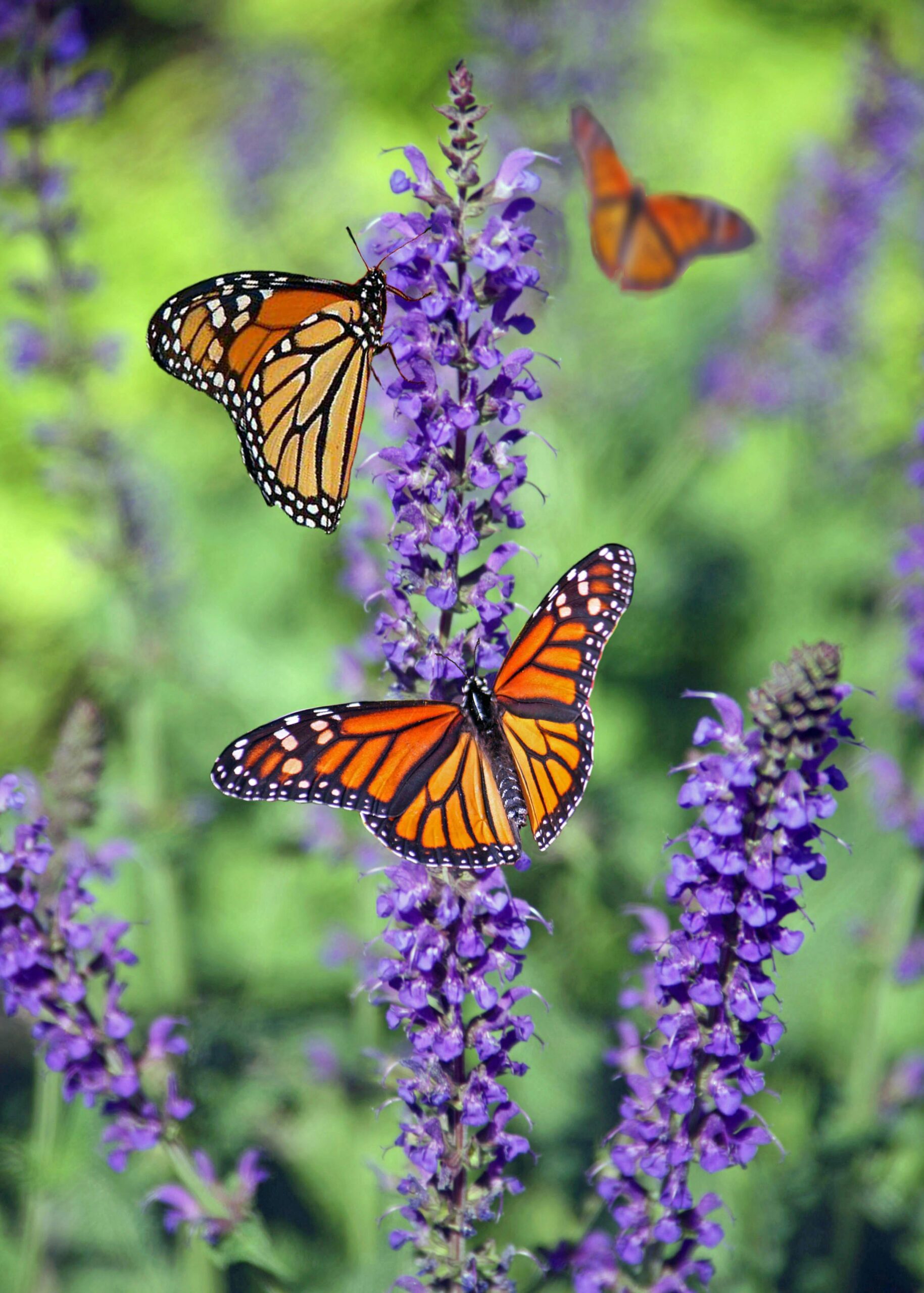
Negative Feedback Control of GFR
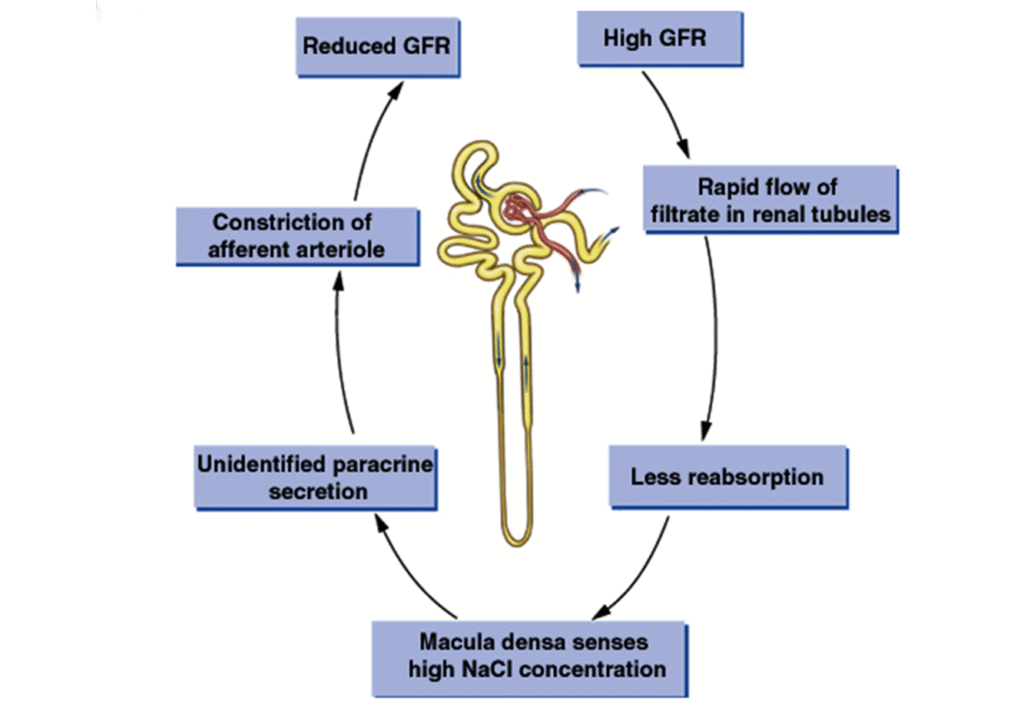
Renal Autoregulation of GFR
• BP ® constrict afferent arteriole, dilate efferent
• BP ® dilate afferent arteriole, constrict efferent
•Stable for BP range of 80 to 170 mmHg (systolic) Cannot compensate for extreme BP
Sympathetic Control of GFR
•Strenuous exercise or acute conditions (circulatory shock) stimulate afferent arterioles to constrict
•GFR and urine production, redirecting blood flow to heart, brain and skeletal muscles
Hormonal Control of GFR
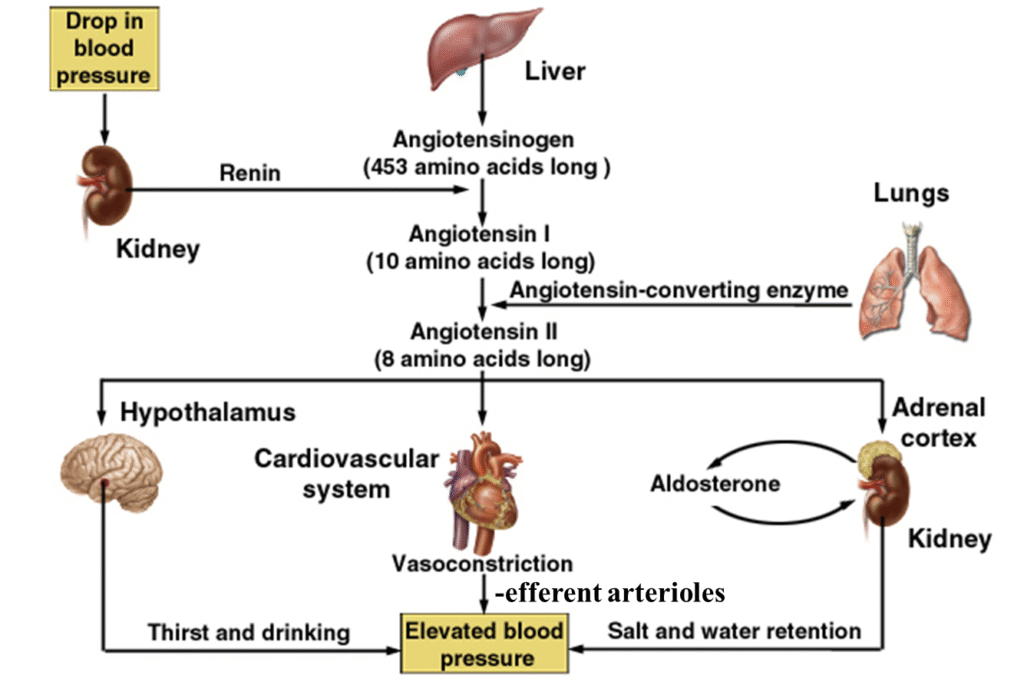
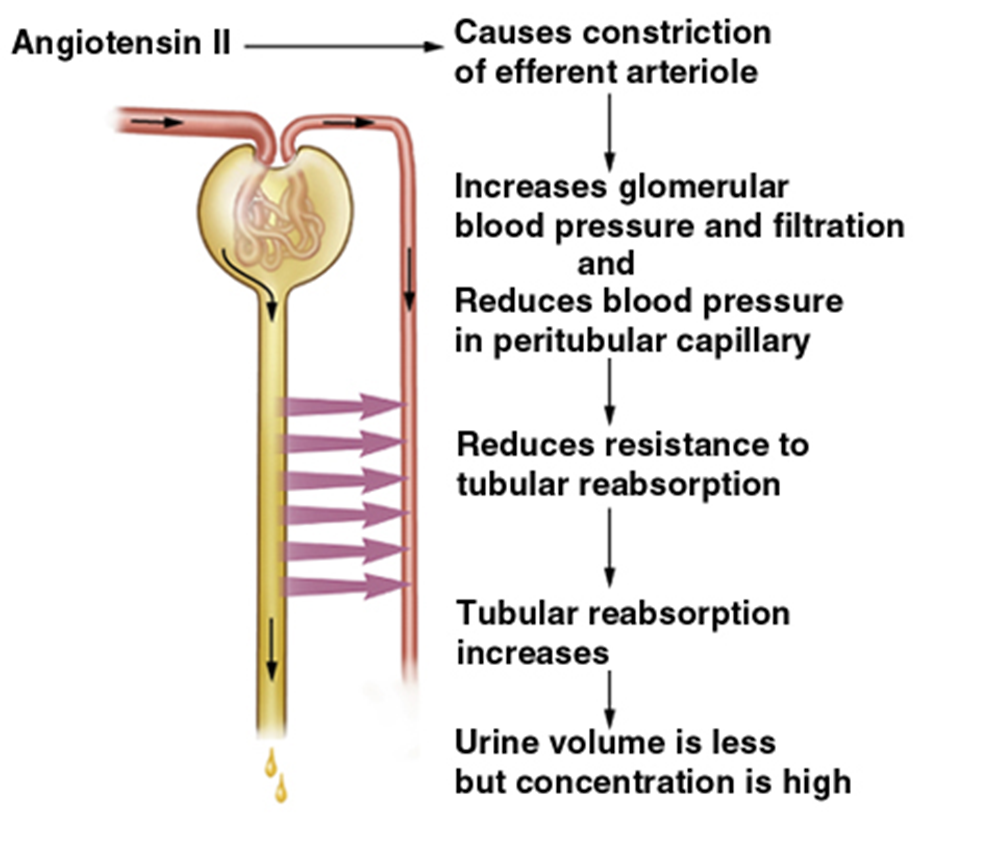
Effects of Angiotensin II
Tubular Reabsorption and Secretion
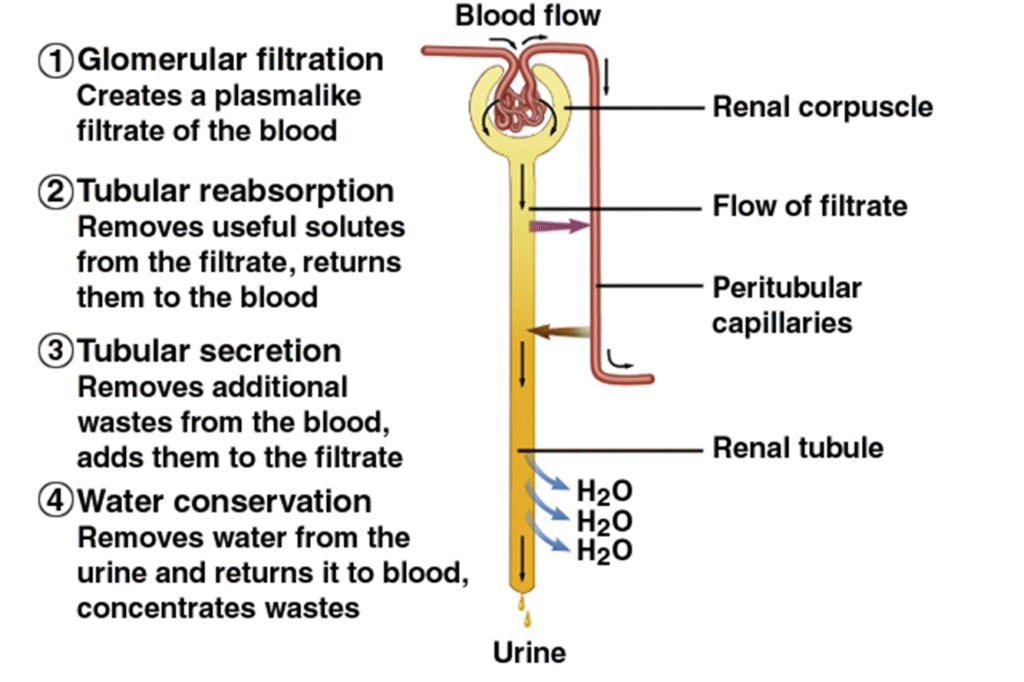
Peritubular Capillaries
•Blood has unusually high COP here, and BHP is only 8 mm Hg (or lower when constricted by angiotensin II); this favors reabsorption
•Water absorbed by osmosis and carries other solutes with it (solvent drag)
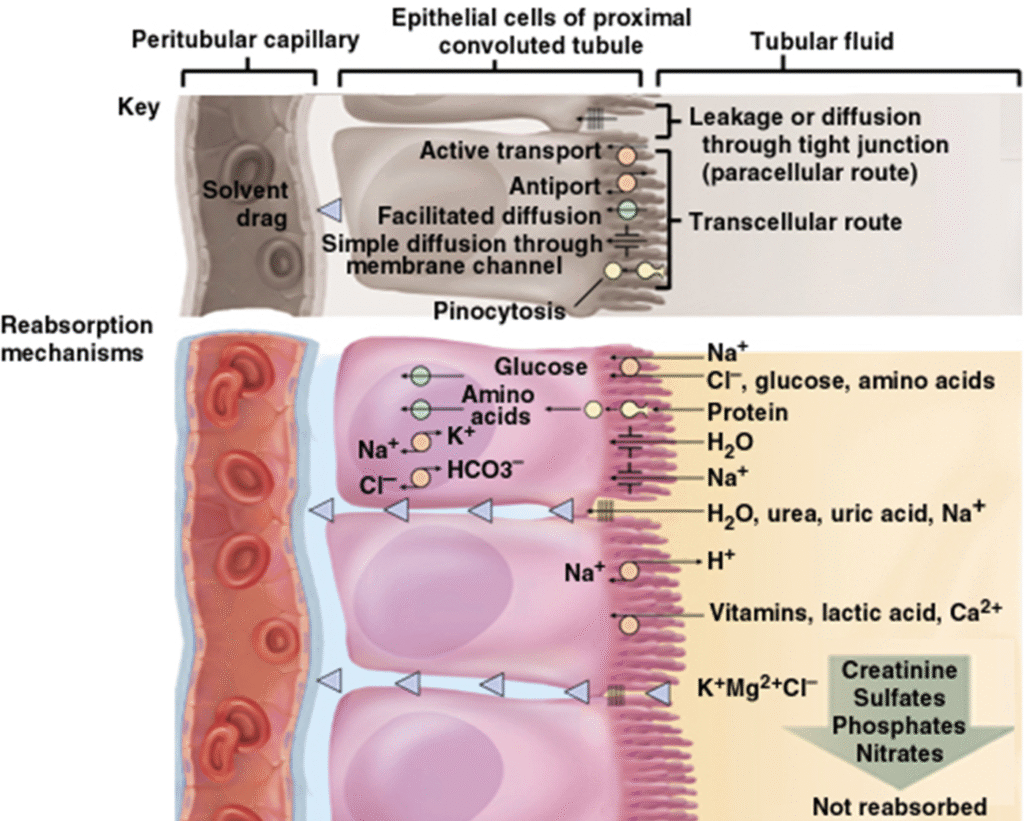
Proximal Convoluted Tubules (PCT)
•Reabsorbs 65% of GF to peritubular capillaries
•Great length, prominent microvilli and abundant mitochondria for active transport
•Reabsorbs greater variety of chemicals than other parts of nephron
–transcellular route – through epithelial cells of PCT
–paracellular route – between epithelial cells of PCT
•Transport maximum: when transport proteins of plasma membrane are saturated; glucose > 220 mg/dL remains in urine (glycosuria)
Tubular Secretion of PCT and Nephron Loop
•Waste removal
–urea, uric acid, bile salts, ammonia, catecholamines, many drugs
•Acid-base balance
–secretion of hydrogen and bicarbonate ions regulates pH of body fluids
•Primary function of nephron loop water conservation, also involved in electrolyte reabsorption.
DCT and Collecting Duct
•Effect of aldosterone
1– BP causes angiotensin II formation
2–angiotensin II stimulates adrenal cortex
3–adrenal cortex secretes aldosterone
4–aldosterone promotes Na+ reabsorption
5–Na+ reabsorption promotes water reabsorption
6–water reabsorption – urine volume
7–BP drops less rapidly
DCT and Collecting Duct 2
•Effect of atrial natriuretic factor (ANF)
1– BP stimulates right atrium
2–atrium secretes ANF
3–ANF promotes Na+ and water excretion
4–BP drops
•Effect of ADH
1–dehydration stimulates hypothalamus
2–hypothalamus stimulates posterior pituitary
3–posterior pituitary releases ADH
4–ADH water reabsorption
5–urine volume
Collecting Duct Concentrates Urine
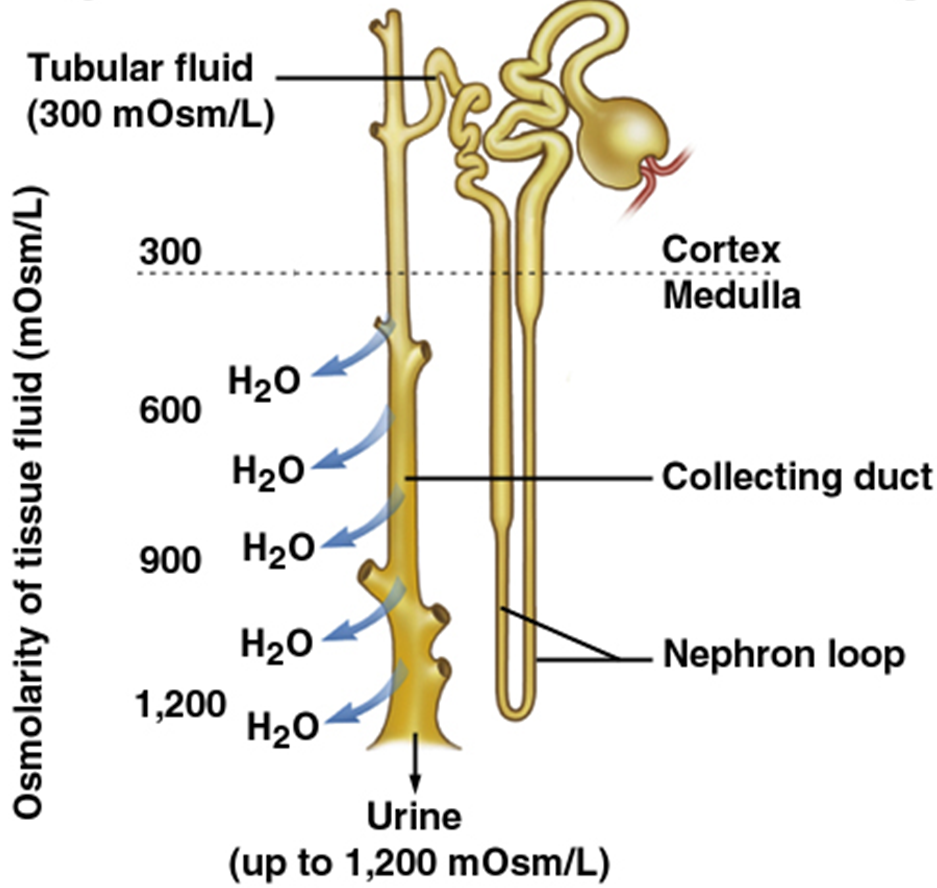
•Osmolarity 4x as high deep in medulla
•Medullary portion of CD is permeable to water but not to NaCl
Control of Water Loss
•Producing hypotonic urine
NaCl reabsorbed by cortical CD
water remains in urine
•Producing hypertonic urine
GFR drops
tubular reabsorption
less NaCl remains in CD
ADH CD’s water permeability
more water is reabsorbed
urine is more concentrated
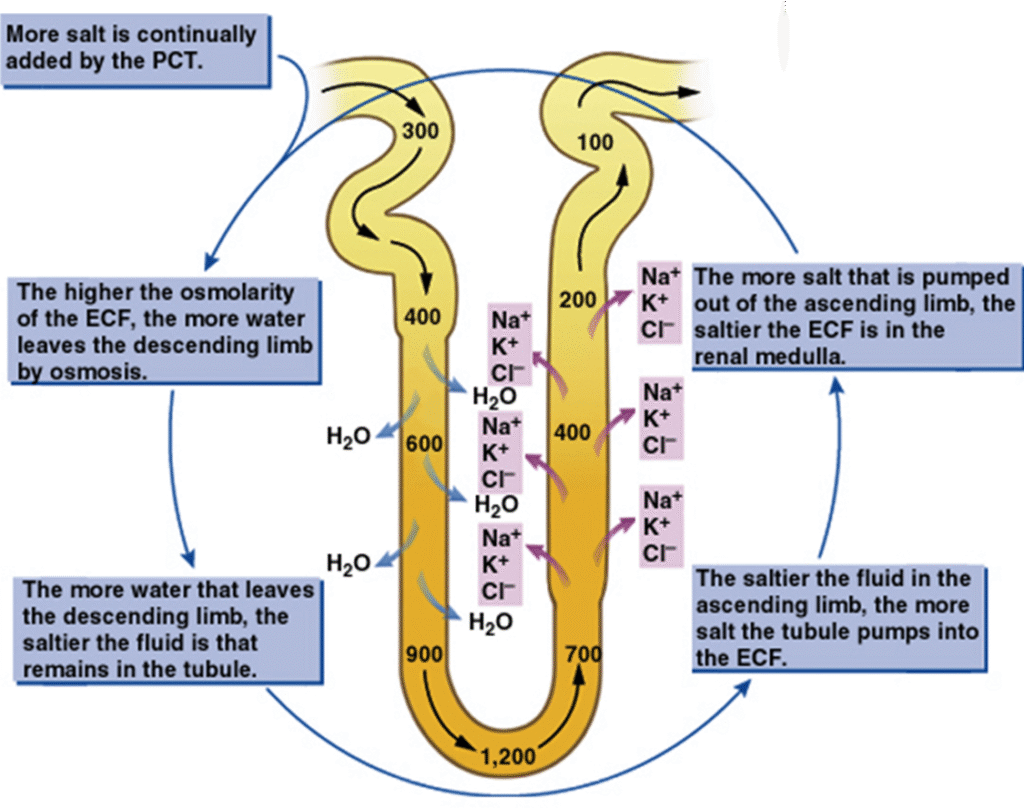
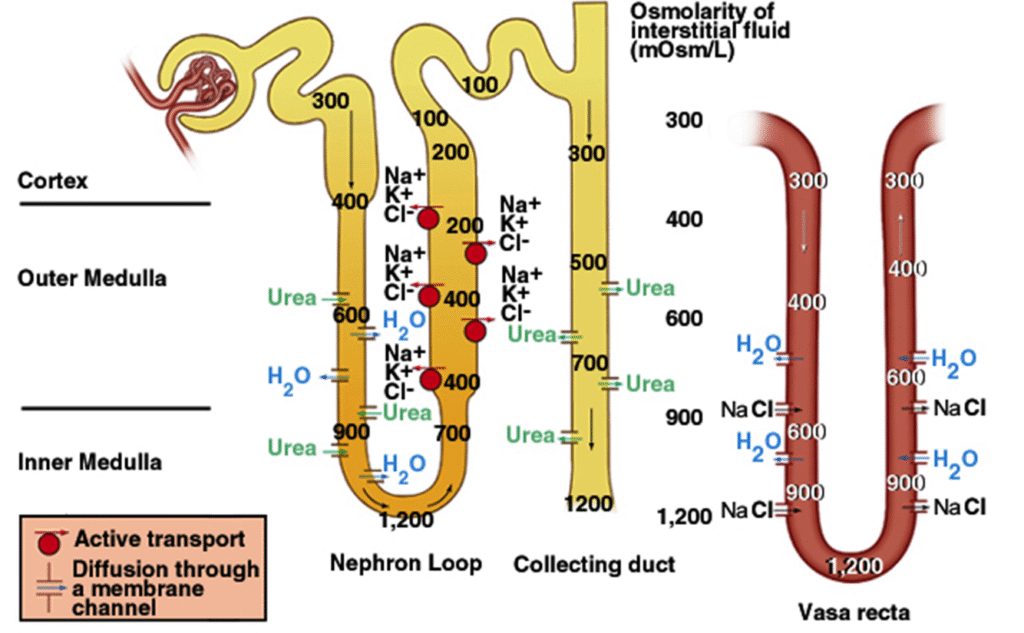
Countercurrent Multiplier
•Recaptures NaCl and returns it to renal medulla
•Descending limb
–reabsorbs water but not salt
–concentrates tubular fluid
•Ascending limb
–reabsorbs Na+, K+, and Cl–
–maintains high osmolarity of renal medulla
–impermeable to water
–tubular fluid becomes hypotonic
•Recycling of urea: collecting duct-medulla
–urea accounts for 40% of high osmolarity of medulla
Countercurrent Multiplier of Nephron Loop Diagram
Countercurrent Exchange System
•Formed by vasa recta
–provide blood supply to medulla
–do not remove NaCl from medulla
•Descending capillaries
–water diffuses out of blood
–NaCl diffuses into blood
•Ascending capillaries
–water diffuses into blood
–NaCl diffuses out of blood
Maintenance of Osmolarity in Renal Medulla
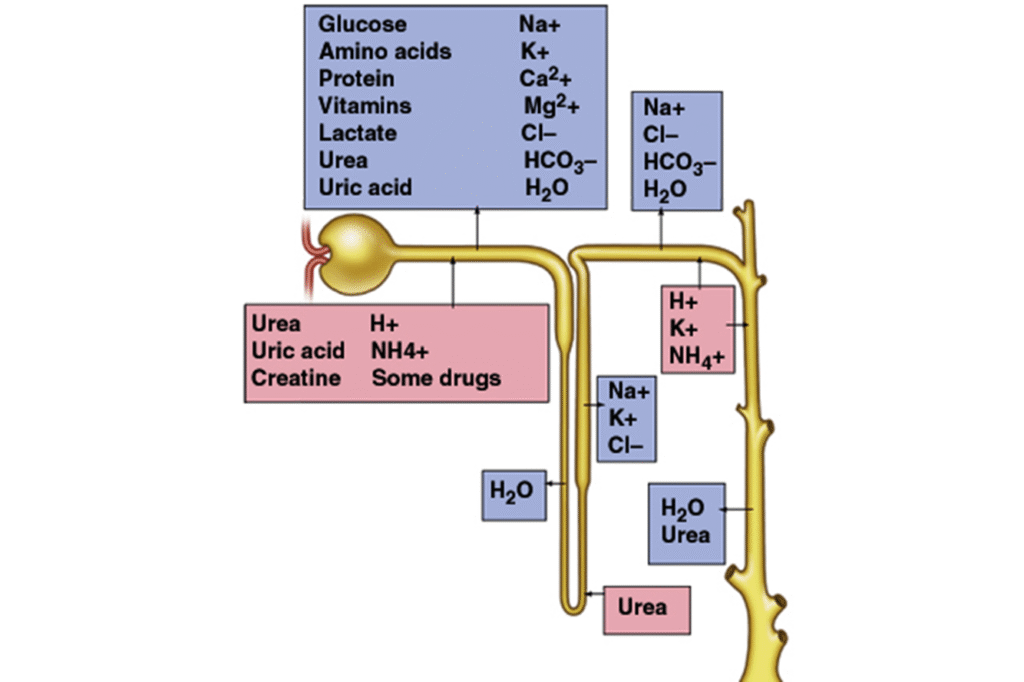
Summary of Tubular Reabsorption and Secretion
Reference
Animal physiology by Eckert, 4th edition