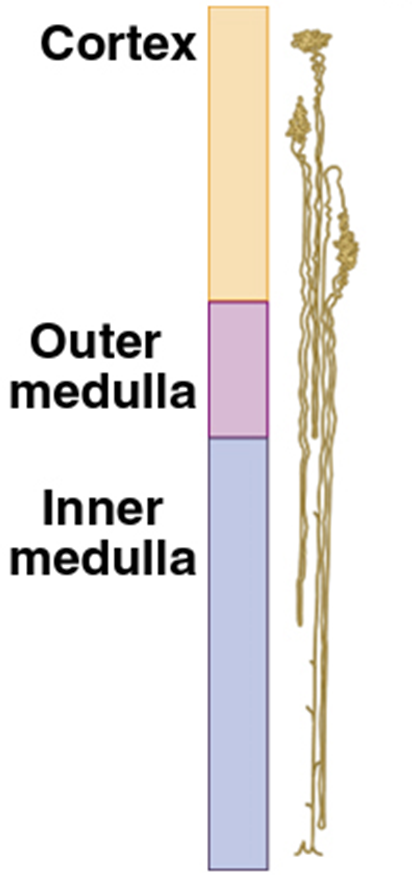
Nephron
•True proportions of nephron loops to convoluted tubules shown
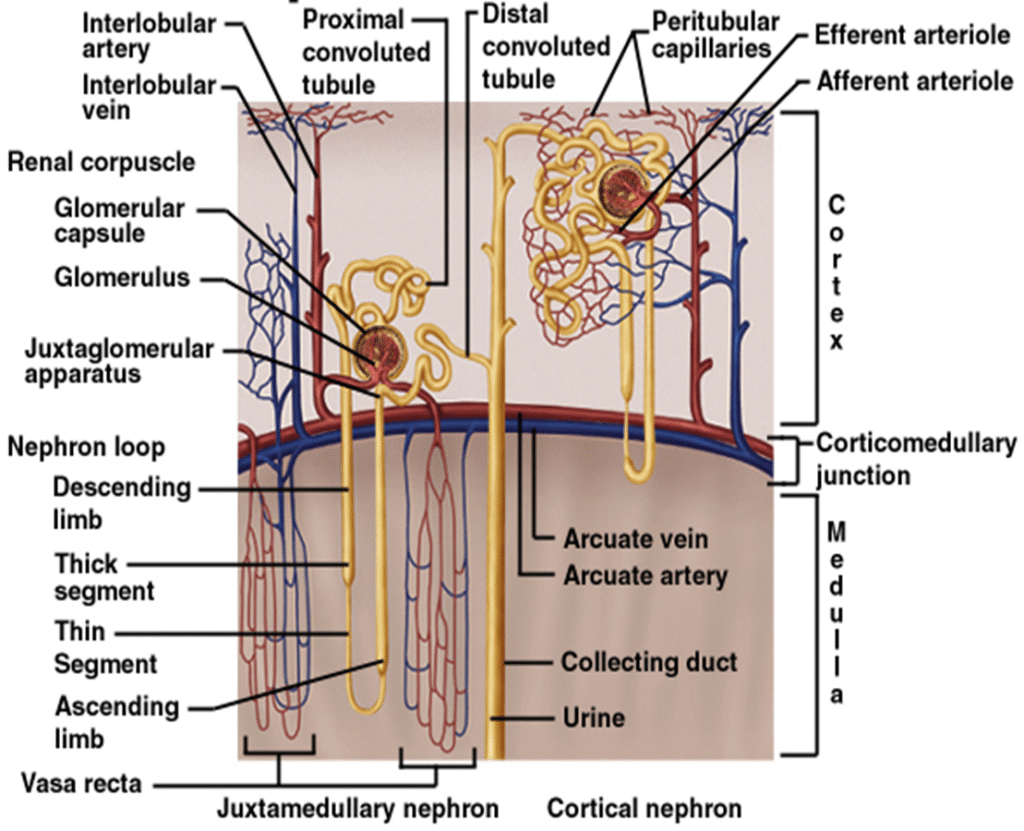
•Cortical nephrons (85%)
–short nephron loops
–efferent arterioles branch off peritubular capillaries
•Juxtamedullary nephrons (15%)
–very long nephron loops, maintain salt gradient, helps conserve water
–efferent arterioles branch off vasa recta, blood supply for medulla
Nephron Diagram
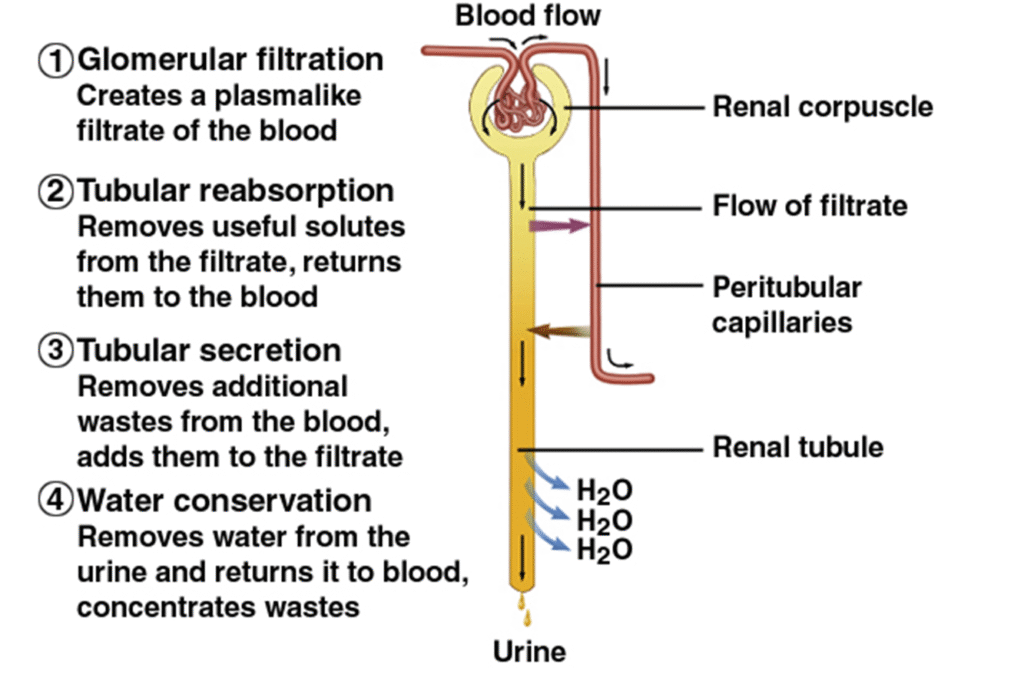
Urine Formation Preview
Filtration Membrane Diagram
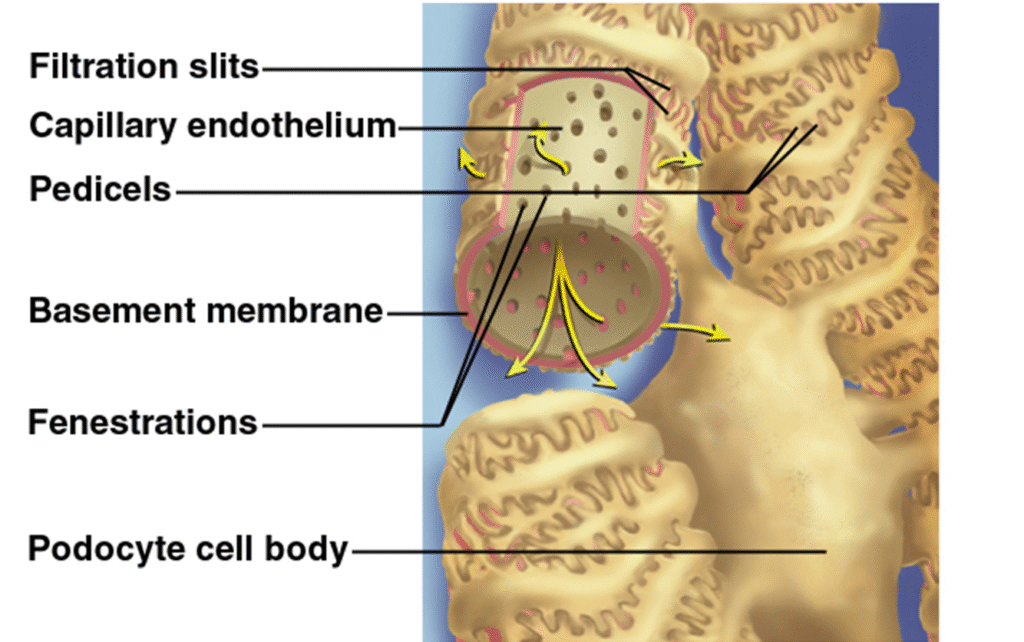
Filtration membrane structure
•Fenestrated endothelium
–70-90nm pores exclude blood cells
•Basement membrane
–proteoglycan gel, negative charge excludes molecules > 8nm
– blood plasma 7% protein, glomerular filtrate 0.03%
•Filtration slits
–podocyte arms have pedicels with negatively charged filtration slits, allow particles < 3nm to pass
Filtration Pressure
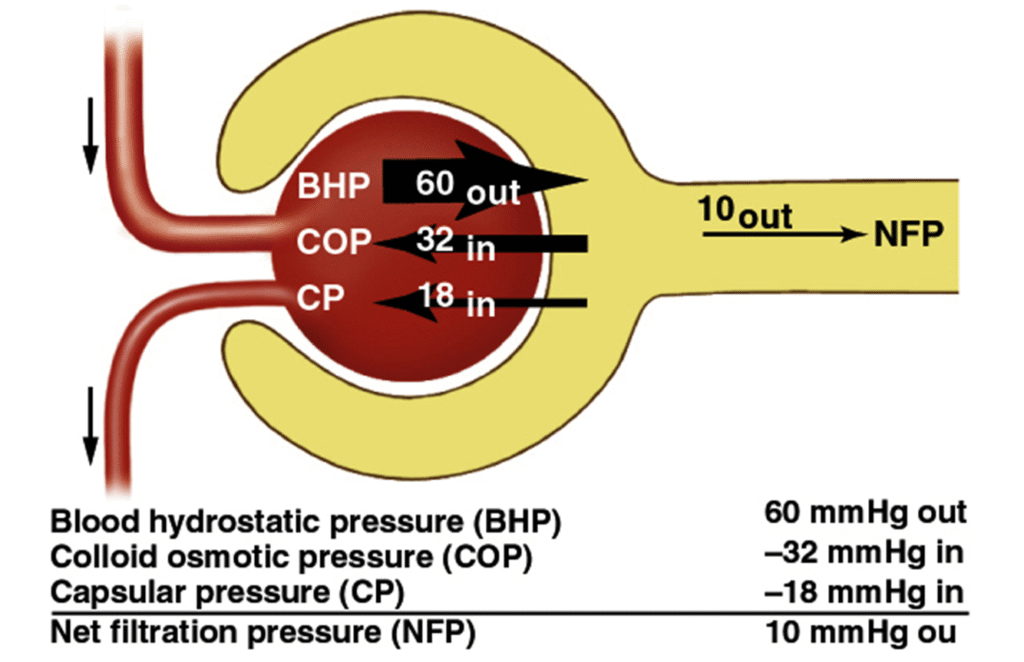
Glomerular Filtration Rate (GFR)
•Filtrate formed per minute
•Filtration coefficient (Kf) depends on permeability and surface area of filtration barrier
•GFR = NFP x Kf » 125 ml/min or 180 L/day
•99% of filtrate reabsorbed, 1 to 2 L Glomerular Filtration Rate (GFR) urine excreted.
Effects of GFR Abnormalities
•GFR, urine output rises ® dehydration, electrolyte depletion
•¯GFR ® wastes reabsorbed (azotemia possible)
•GFR controlled by adjusting glomerular blood pressure
–Auto regulation
–sympathetic control
–hormonal mechanism: renin and angiotensin.
Juxtaglomerular Apparatus

Renal Autoregulation of GFR
• BP ® constrict afferent arteriole, dilate efferent
• ¯ BP ® dilate afferent arteriole, constrict efferent
•Stable for BP range of 80 to 170 mmHg (systolic)
•Cannot compensate for extreme BP
Reference
Eckert,4th edition, Animal physiology mechanisms and adaptations