Acrosome reaction assists in fusion of plasma membrane of egg/ovum and sperm. Interaction between sperm and egg jelly results in the acrosome reaction.
In most marine invertebrates, the acrosome reaction has two components.
1- The fusion of the acrosomal vesicles with the sperm cell membrane.
2- The extension of the acrosomal process.
Acrosome Reaction in Sea Urchin
The acrosome reaction in sea urchin is initiated by contact of the sperm with egg jelly. Contact causes the exocytosis of sperms acrosomal vesicle and proteolytic enzymes and proteasomes (protein-digesting complexes) that digest a path through the jelly coat to the egg surface.
Once sperm reaches egg surface, the acrosomal process adheres to vitelline envelope and tethers the sperm to egg. It’s possible that proteasomes digest the vitelline envelope at point of attachment and proceeds toward egg.
The acrosome reaction is initiated by the interactions of sperm cell membrane with a specific complex sugar in egg jelly. These sulfate-containing polysaccharides bind to specific receptors located on sperm cell membrane directly above the acrosomal vesicle.
Mechanism of Acrosome reaction in sea urchin (S. Purpuratus)
The acrosome reaction is initiated by a repeating polymer of fucose sulfate. When this sulfated carbohydrate binds to its receptor on the sperm, the receptor activates three sperm membrane proteins
1– a calcium transport channel that allows Ca2+ to enter the sperm head.
2- a sodium /hydrogen exchanger that pumps sodium ions (Na+) into sperm as it pumps hydrogen ions out.
3- a phospholipase enzyme that makes another 2nd messenger, the phospholipid inositol triphosphate IP3, is able to release ca2+ from inside sperm, probably from within the acrosome itself.
The elevated Ca2+ level in a relatively basic cytoplasm triggers the fusion of acrosomal membrane with adjacent sperm cell membrane, releasing enzymes that can lyse a path through the egg jelly to the vitelline envelope.
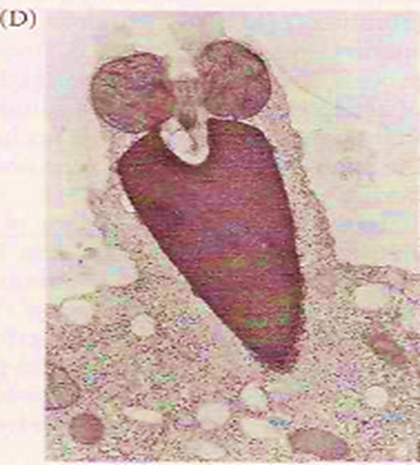
Acrosome reaction in sea urchin sperm. (A-C) The portion of the acrosomal membrane lying directly beneath the sperm cell membrane fuses with the cell membrane to release the contents of the acrosomal vesicle.
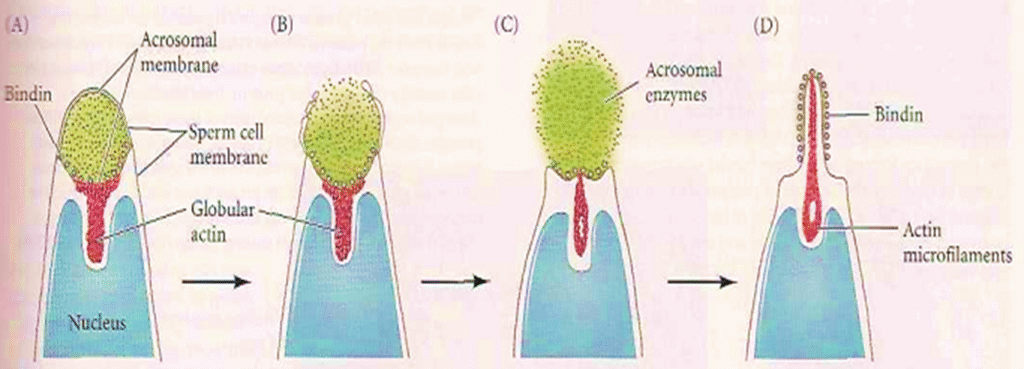
(D)The actin molecules assemble to produce microfilaments, extending the acrosomal process outward.
The Recognition of the eggs extracellular coat
The sperm’s contact with an egg’s jelly coat provides the first set of species-specific recognition events (i.e., sperm attraction, activation, and acrosome reaction).
Another critical species-specific binding event must occur once the sea urchin sperm has penetrated the jelly and the acrosomal process of the sperm contacts the surface of the egg.
The acrosomal protein mediating this recognition in sea urchins is called bindin.
Further, its interaction with eggs is often species-specific. Bindin isolated from the acrosomes of S. purpuratus binds to its own DE jellied eggs but not to those of S. fradicin.
The localization of Bindin on acrosomal process
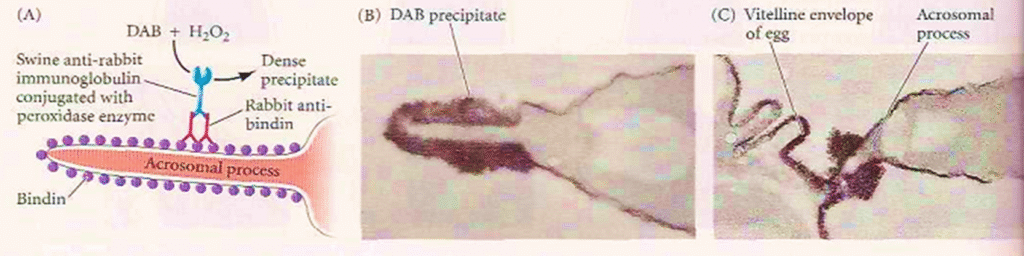
(A) Immunochemical technique used to localize bindin. Rabbit antibody was made to the bindin protein, and this antibody was incubated with sperm that had undergone the acrosome reaction.
If bindin were present, the rabbit antibody would remain bound to the sperm. After any unbound antibody was washed off, the sperm were treated with swine antibody that had been covalently linked to peroxidase enzymes.
The swine antibody bound to the rabbit antibody, placing peroxidase molecules wherever bindin was present.
Peroxidase catalyzes the formation of a dark precipitate from diaminobenzidine (DAB) and hydrogen peroxide. Thus, this precipitate formed only where bindin was present.
(B) Localization of bindin to the acrosomal process after the acrosome reaction.
(C) Localization of bindin to the acrosomal process at the junction of the sperm and the egg.
Biochemical studies have shown that the bindins of closely related sea urchin species indeed have different protein sequences. This finding implies the existence of species-specific bindin receptors on the egg vitelline envelope.
Fusion of egg and sperm cell membrane
Once the sperm has travelled to the egg and undergone the acrosome reaction, the fusion of the sperm cell membrane with the cell membrane of the egg can begin.
Sperm-egg fusion appears to cause the polymerization of actin in the egg to form a fertilization cone.
Homology between the egg and the sperm is again demonstrated, since the sperm’s acrosomal process also appears to be formed by the polymerization of actin. The actin from the gametes forms a connection that widens the cytoplasmic bridge between the egg and the sperm. The sperm nucleus and tail pass through this bridge.
In the sea urchin, all regions of the egg cell membrane are capable of fusing with sperm. In several other species, certain regions of the membrane are specialized for sperm recognition and fusion.
Fusion is an active process, often mediated by specific “fusogenic” proteins.
sea urchin sperm bindin plays a second role as a fusogenic protein.
In addition to recognizing the egg, bindin contains a long stretch of hydrophobic amino acids near its amino terminus, and this region is able to fuse phospholipid vesicles.
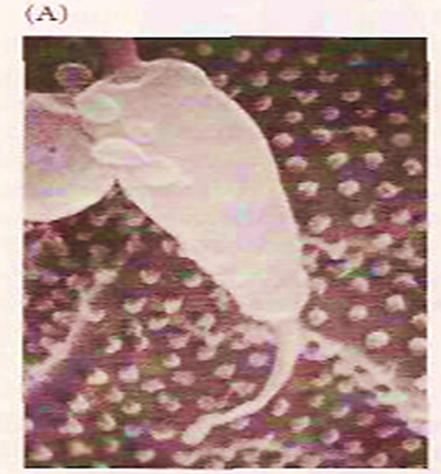
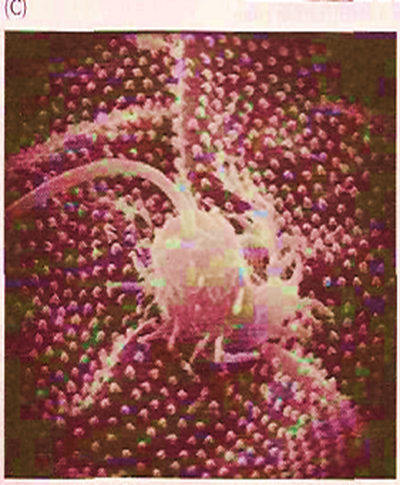
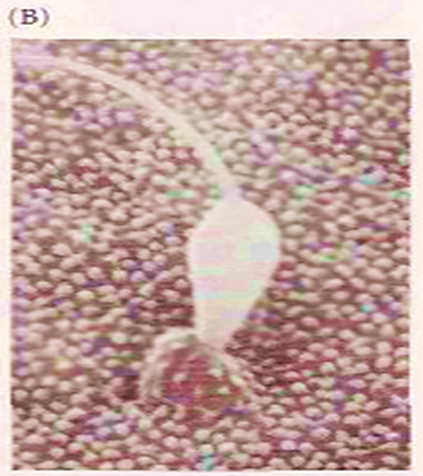
In image (A) Contact of sperm head with egg microvillus through the acrosomal process occurred. image (B) Formation of fertilization cone.