Introduction
The endocrine system is made up of the cells, tissues, and organs that secrete hormones into body fluid. Hormones diffuse into the bloodstream to act target cells some distance away. The body has two kinds of glands, exocrine (secretes products into ducts) and endocrine (secrete products into body fluids to affect target cells).
General Characteristics of the Endocrine System
A. The endocrine system’s function is to communicate with cells using chemicals called hormones.
B. Endocrine glands and their hormones regulate a number of metabolic processes within cells, and the whole body.
C. Their actions are precise, they only affect specific target cells.
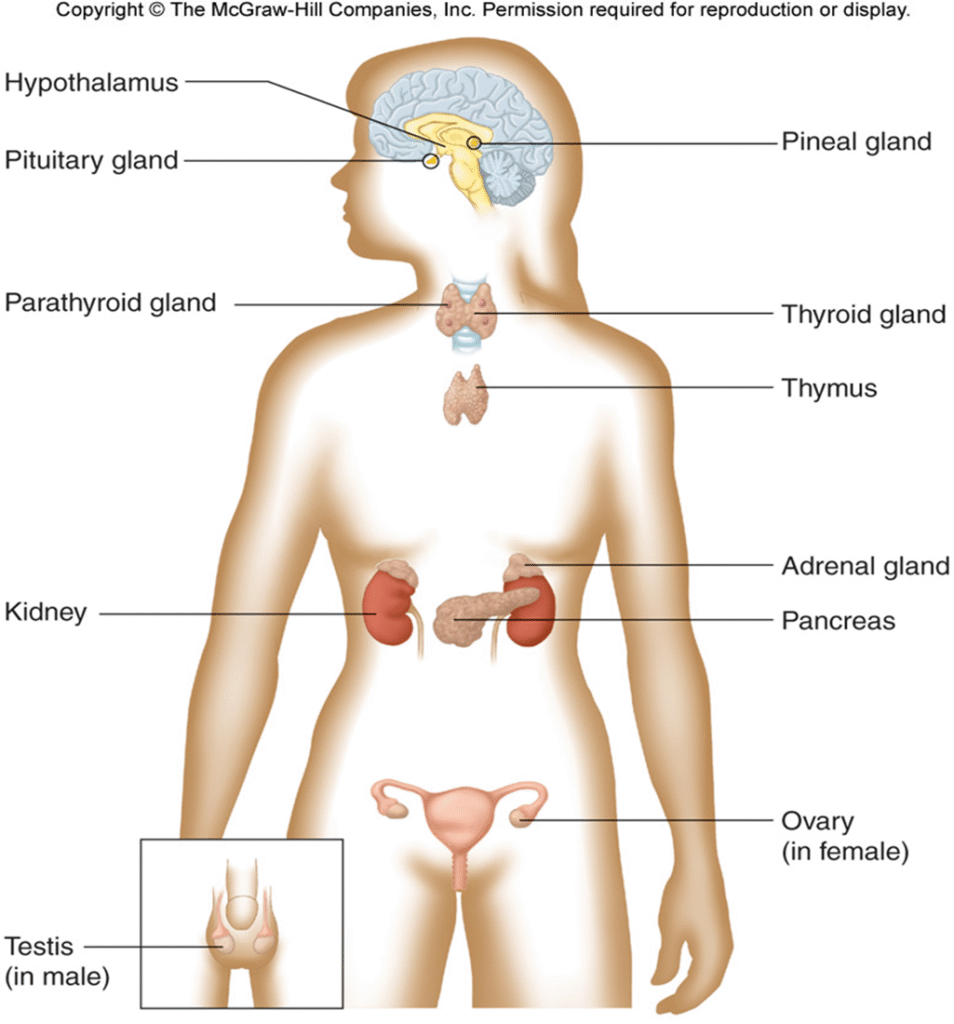
D. Endocrine glands include the pituitary gland, thyroid gland, parathyroid glands, adrenal glands, pancreas, and other hormone- secreting glands and tissues.
Control Pathways and Feedback Loops
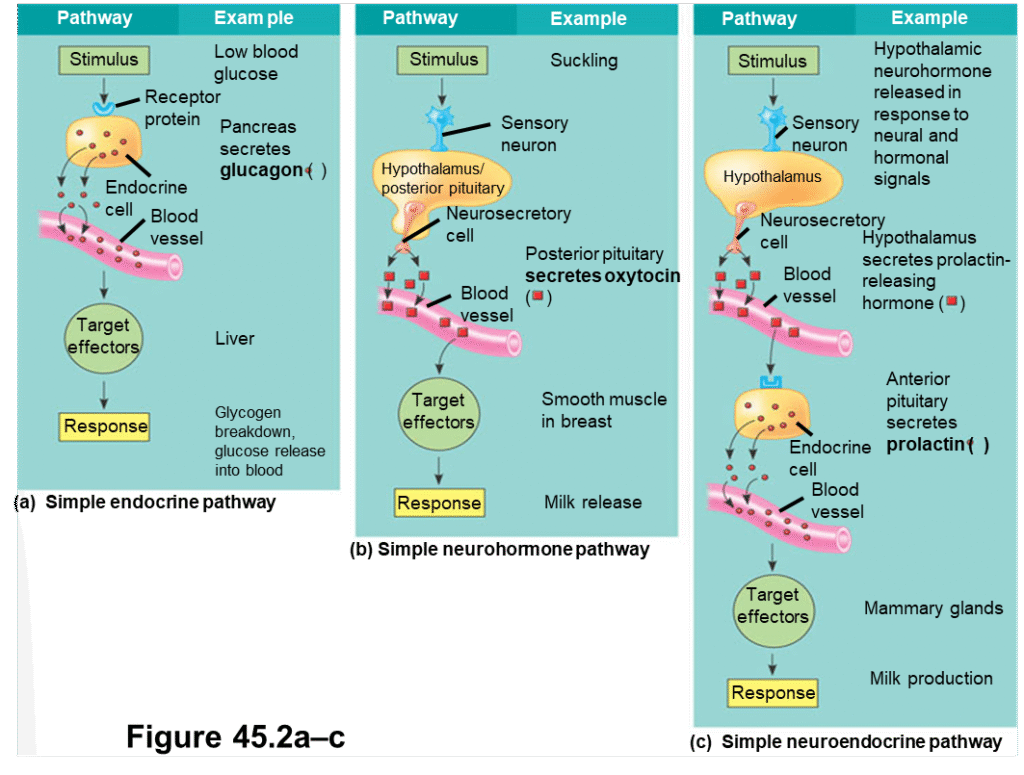
There are three types of hormonal control pathways.
Hormone Action
A. Hormones are steroids, amines, peptides, proteins, or glycoproteins; they can influence target cells even if they are present only in minute concentrations.
B. Steroid Hormones
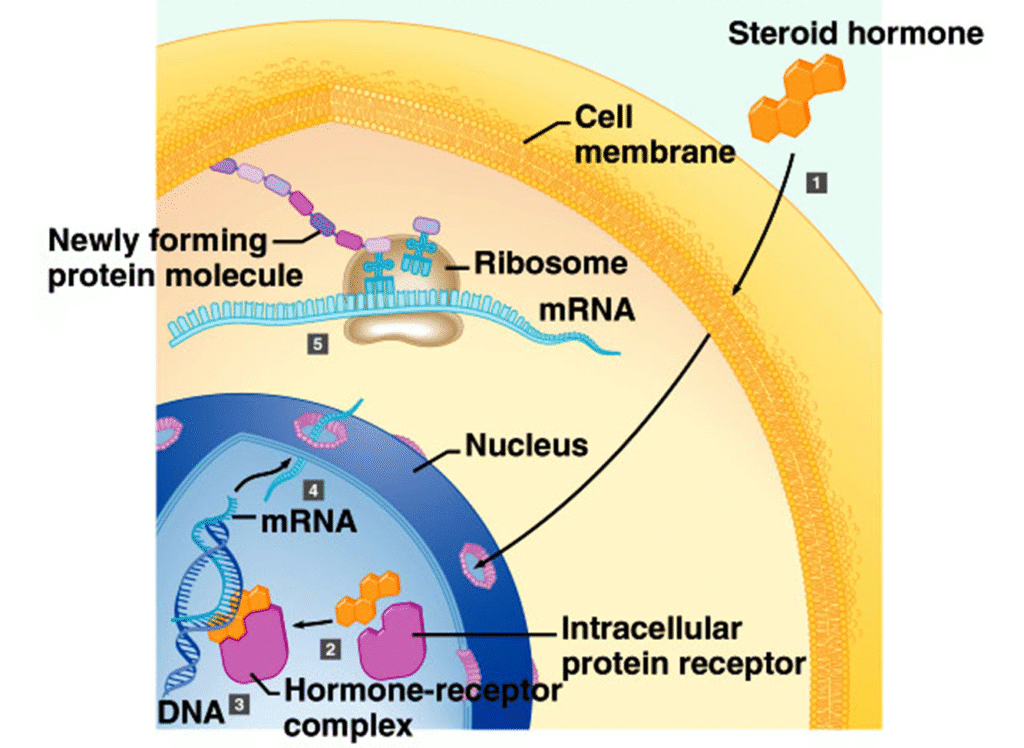
1. Steroid hormones are lipid-soluble and can pass through cell membranes.
2. Receptors for steroid hormones are located in the target cell’s nucleus.
3. The hormone-receptor complex binds with the DNA and activates specific genes that, in turn, direct the synthesis of specific proteins.
C. Nonsteroid Hormones
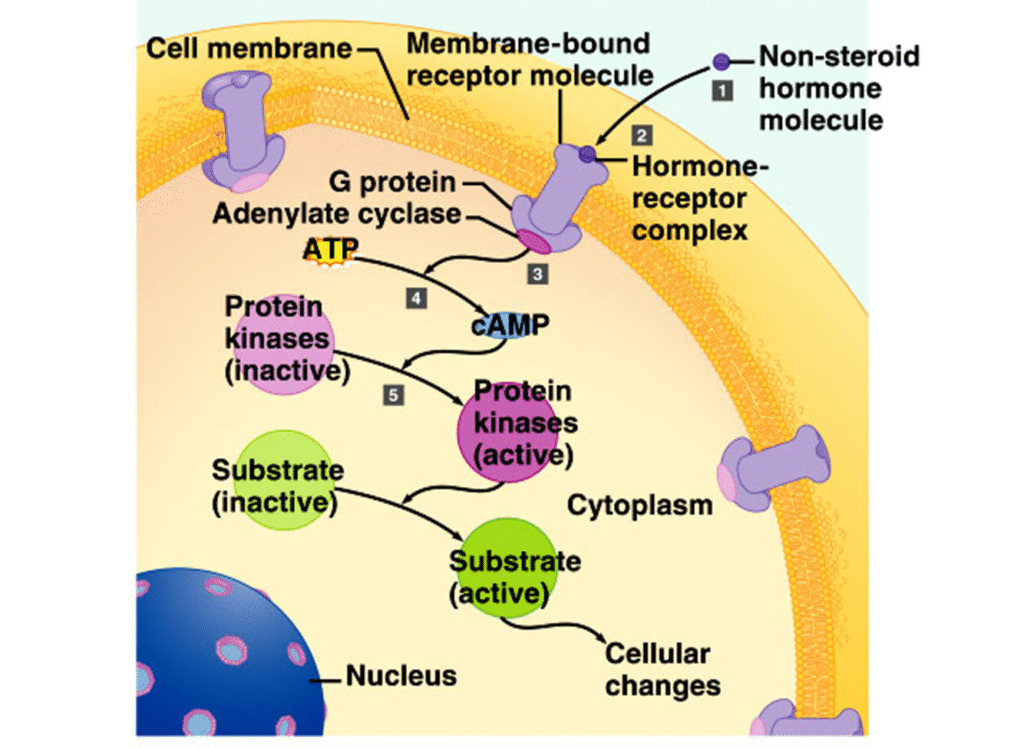
1. Nonsteroid hormones combine with receptors in target cell membranes; the receptors have a binding site and an activity site.
2. The hormone-receptor complex (as first messenger) triggers a cascade of biological activity.
3. The hormone-receptor complex generally activates a G protein, which then activates the enzyme adenylate cyclase that is bound to the inner cell membrane.
4. This enzyme removes two phosphates from ATP to produce cyclic AMP (the second messenger), which in turn activates protein enzymes that activate proteins.
5. These activated proteins induce changes in the cell.
6. Not all nonsteroid hormones use cAMP; others use diacylglycerol (DAG) or inositol triphosphate.
D. Prostaglandins
1. Prostaglandins are locally produced lipids that affect the organ in which they are produced.
2. Prostaglandins produce a variety of effects: some relax smooth muscle, others contract smooth muscle, some stimulate secretion of other hormones, and others influence blood pressure and inflammation.
Control of Hormonal Secretions
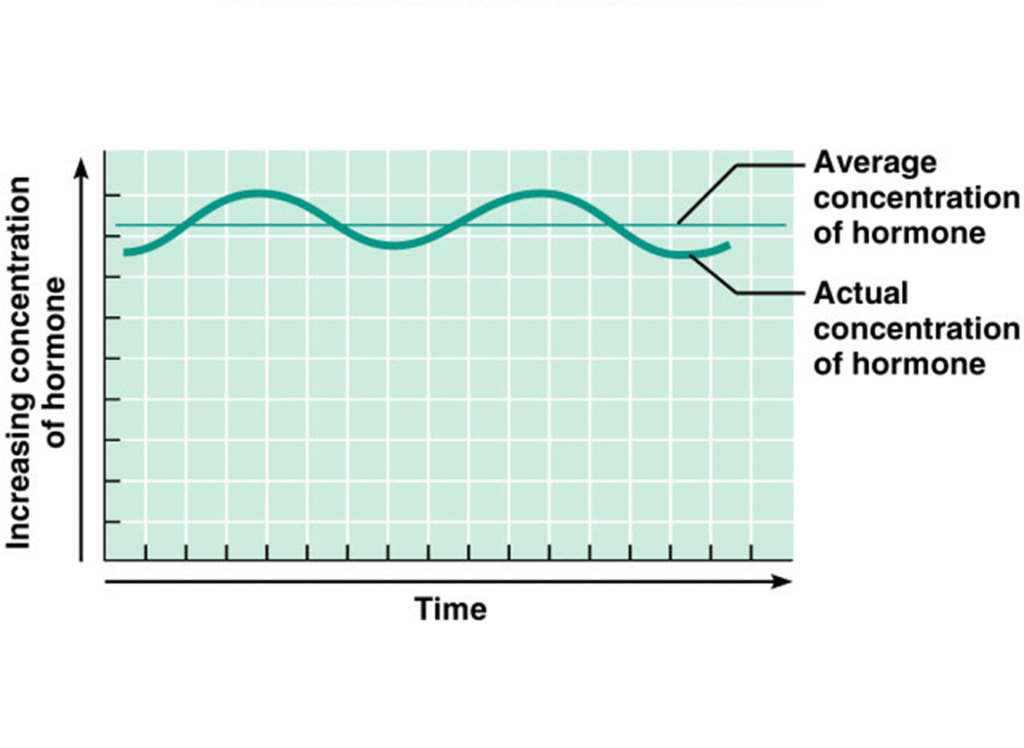
A. Hormone levels are very precisely regulated.
B. Control Mechanisms
1. Release of tropic hormones from the hypothalamus controls secretions of the anterior pituitary.
2. The nervous system influences certain endocrine glands directly.
3. Other glands respond directly to changes in the internal fluid composition.
C. Negative Feedback Systems
1. Commonly, negative feedback mechanisms control hormonal releases.
2. In a negative feedback system, a gland is sensitive to the concentration of the substance it regulates or which regulates it.
3. When the concentration of the regulated substance reaches a certain level (high or low), it inhibits the gland from secreting more hormone until the concentration returns to normal.
Pituitary Gland
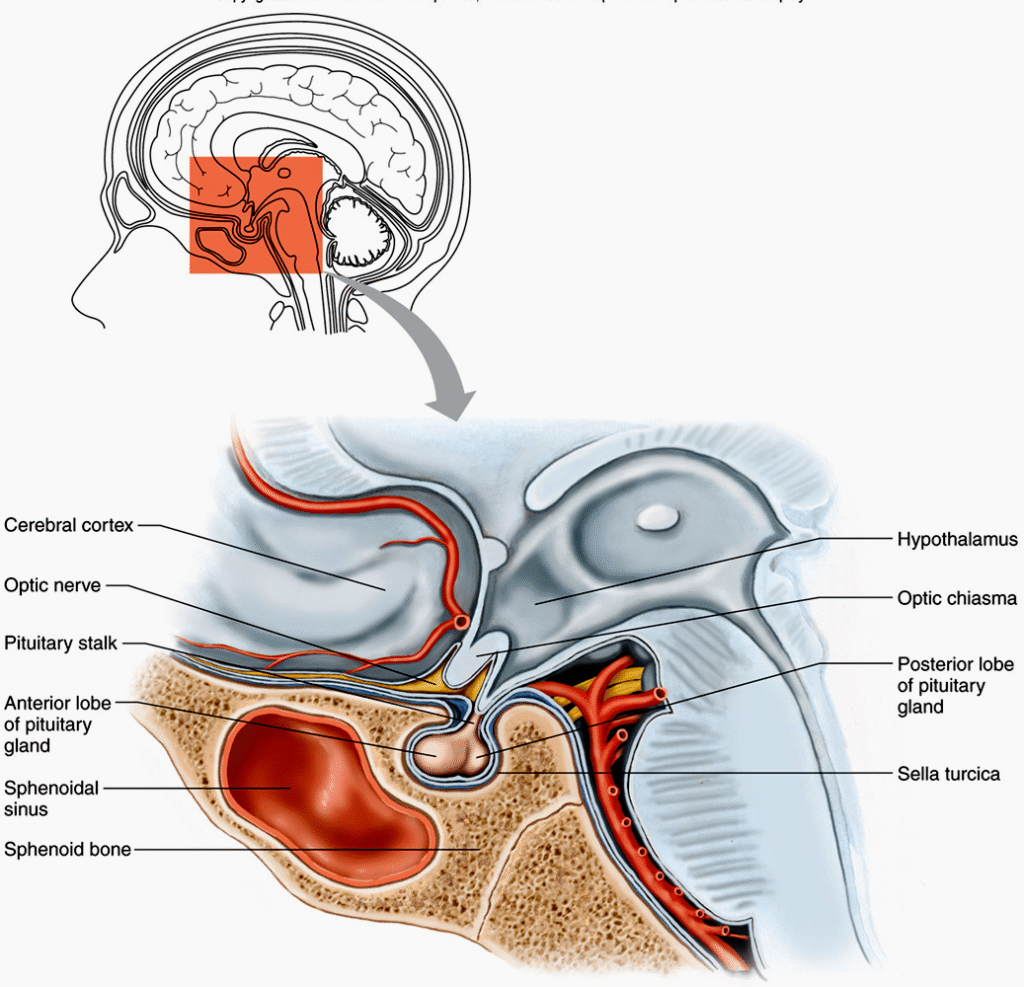
A. The pituitary gland is attached to the base of the brain and has an anterior lobe (anterior pituitary) and a posterior lobe (posterior pituitary).
B. The brain controls the activity of the pituitary gland.
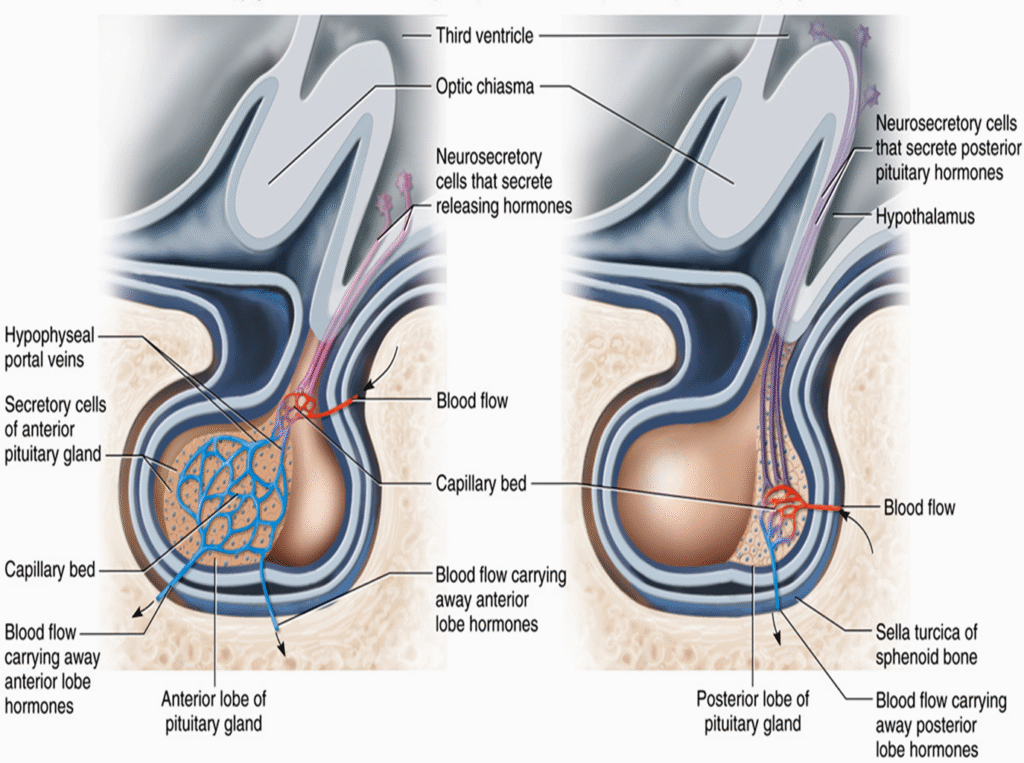
1. Releasing hormones from the hypothalamus control the secretions of the anterior pituitary. The releasing hormones are carried in the bloodstream directly to the anterior pituitary by hypophyseal portal veins.
2. The posterior pituitary releases hormones into the bloodstream in response to nerve impulses from the hypothalamus.
C. Anterior Pituitary Hormones
1. The anterior pituitary consists mostly of epithelial tissue arranged around blood vessels and enclosed in a capsule of collagenous connective tissue.